
Why Long-Term Thinking Is Becoming a Competitive Advantage
Most organizations say they think long term.
Few actually do.
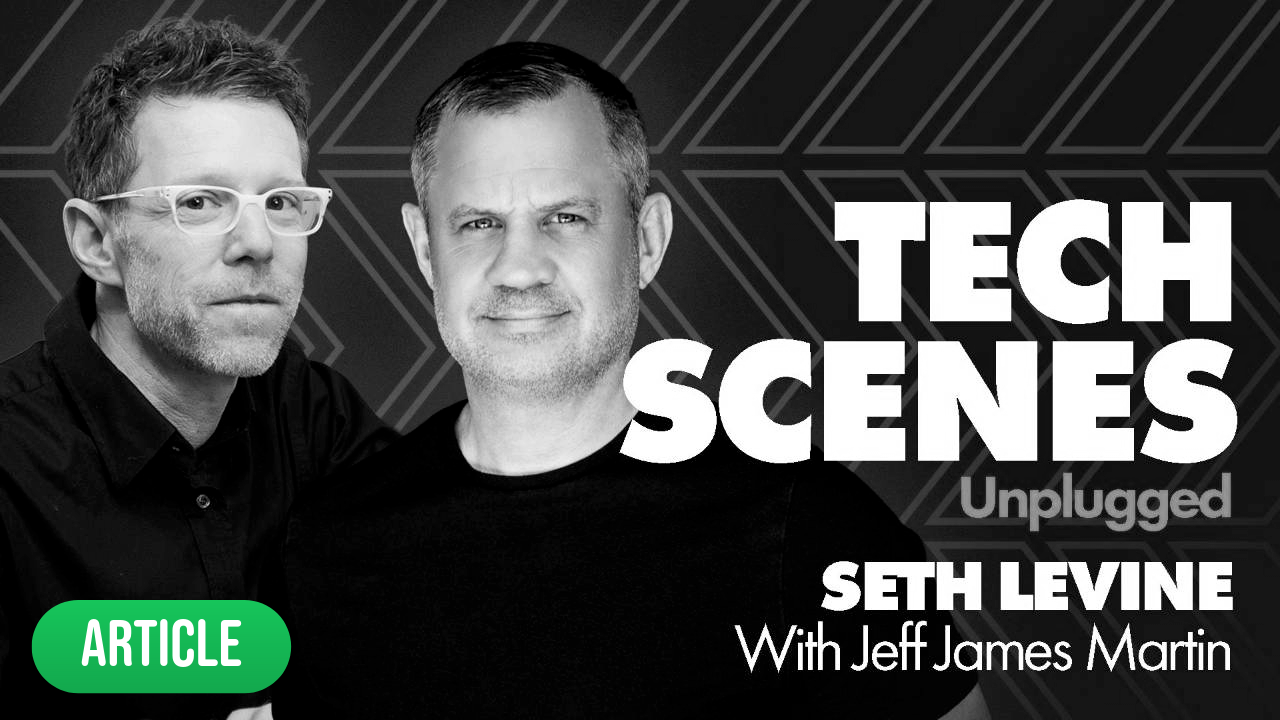
That was one of the strongest themes that emerged during a recent Tech Scenes conversation with Seth Levine, Managing Director at Foundry, entrepreneur, investor, and co-author of Capital Evolution.
You can watch the full Tech Scenes episode here:
-
https://www.collective-genius.com/blog/tech-scenes-with-seth-levine-co-author-of-capital-evolution
-
YouTube: https://youtu.be/u1W309DriVM
-
Spotify: https://open.spotify.com/episode/5hWYraNmkxnECvHvqzxAGa?si=QyFMTmxRROyqM3z_QLvGqw
Throughout the conversation, Seth repeatedly touched on a challenge facing leaders, investors, and organizations alike:
How do you make decisions that create value years from now while still delivering results today?
In a world increasingly driven by quarterly results, constant notifications, and rapid technological change, long-term thinking may be becoming one of the rarest organizational capabilities.
It may also be one of the most valuable.
Modern Organizations Are Under Constant Pressure
Most organizations operate inside a system that rewards immediacy.
Leaders feel pressure from:
-
customers
-
investors
-
employees
-
competitors
-
market conditions
Every day presents a new set of urgent problems.
As a result, many organizations become trapped in short-term optimization.
They focus on:
-
immediate revenue
-
immediate efficiency
-
immediate outcomes
-
immediate challenges
Those things matter.
But over time, an exclusive focus on short-term performance can create long-term weaknesses.
Organizations stop investing in:
-
leadership development
-
organizational learning
-
team capability
-
strategic planning
-
innovation
The very things that create sustainable advantage.
The Best Investors Think Differently
One of the reasons Seth has been successful as an investor is that venture investing naturally forces long-term thinking.
Most venture investments take years to mature.
The best outcomes are rarely visible in the first few months.
Often they are not visible in the first few years.
This creates an important discipline.
Investors must evaluate:
-
potential
-
leadership
-
adaptability
-
market evolution
-
organizational capability
rather than simply focusing on immediate results.
The same principle applies to organizations.
Many of the most important investments companies make today will not generate meaningful returns immediately.
Leadership development takes time.
Culture takes time.
Trust takes time.
Alignment takes time.
Learning takes time.
Yet these investments often create the strongest long-term outcomes.
Why Leadership Is a Long-Term Game
One of the most overlooked realities of organizational growth is that leadership compounds.
Every leadership decision influences future decisions.
Every hiring decision shapes future culture.
Every communication pattern becomes part of future organizational behavior.
Leaders are not simply managing the present.
They are continuously shaping the future.
This is one reason short-term leadership often creates long-term problems.
Organizations become reactive.
Decisions become tactical.
Energy becomes fragmented.
The strongest leaders think beyond the current quarter.
They ask:
-
What organization are we building?
-
What capabilities are we developing?
-
What behaviors are we reinforcing?
-
What will matter three years from now?
Those questions create very different decisions.
Why Organizational Learning Creates Long-Term Advantage
One of the recurring themes throughout Seth's conversation was adaptation.
The world changes.
Markets evolve.
Technology advances.
Customer expectations shift.
Organizations that stop learning eventually fall behind.
The companies that scale successfully are often not the ones with the best initial plans.
They are the ones that learn fastest.
Long-term success increasingly depends on:
-
feedback loops
-
experimentation
-
reflection
-
adaptation
-
continuous improvement
These capabilities allow organizations to evolve as conditions change.
Without them, even successful organizations become vulnerable.
The AI Era Rewards Long-Term Thinkers
Artificial intelligence is accelerating nearly every aspect of business.
Products can be built faster.
Analysis can happen faster.
Decisions can happen faster.
Execution can happen faster.
The risk is that organizations become so focused on speed that they lose perspective.
The challenge is not simply moving faster.
The challenge is ensuring speed remains aligned with purpose.
As AI increases organizational velocity, long-term thinking becomes more important.
Not less.
Organizations must still decide:
-
where they are going
-
why they exist
-
what they value
-
what future they are building
Technology can accelerate execution.
It cannot replace direction.
Why Great Teams Create Strategic Pauses
One of the most practical ideas from the conversation involved the value of recurring strategic reflection.
Many successful organizations intentionally create opportunities to step away from daily execution.
They use:
-
quarterly planning
-
annual planning
-
leadership retreats
-
strategic reviews
-
coaching conversations
These activities may appear slow.
In reality, they often accelerate progress.
Without strategic pauses, organizations drift.
Without reflection, priorities blur.
Without alignment, effort becomes fragmented.
The best teams understand that slowing down occasionally is often the fastest path forward.
Long-Term Thinking Requires Operating Rhythm
Many organizations fail to think long term because they never create time for it.
Everything feels urgent.
Everything competes for attention.
Everything demands action.
This is why operating rhythm matters.
Operating rhythm creates recurring opportunities to balance:
-
short-term execution
-
long-term strategy
It creates dedicated time for:
-
planning
-
reflection
-
alignment
-
learning
-
prioritization
Without those rhythms, organizations often become trapped in reaction mode.
With them, organizations gain the ability to continuously reconnect daily work with long-term objectives.
The Future Belongs to Organizations That Can Balance Both
Long-term thinking does not mean ignoring today's realities.
Nor does it mean avoiding action.
The strongest organizations learn to balance both.
They execute aggressively in the present while simultaneously investing in the future.
They focus on today's priorities without losing sight of tomorrow's opportunities.
They solve immediate problems while building long-term capabilities.
This balance may become one of the defining advantages of successful organizations in the coming decade.
Because as technology accelerates change, the ability to maintain long-term perspective becomes increasingly rare.
And increasingly valuable.
Frequently Asked Questions
Why is long-term thinking important for organizations?
Long-term thinking helps organizations invest in leadership development, organizational learning, innovation, and strategic capabilities that create sustainable competitive advantages over time.
Why do leaders struggle with long-term thinking?
Many leaders operate in environments filled with urgent demands from customers, employees, investors, and competitors. The pressure to solve immediate problems can make it difficult to dedicate time to strategic planning and future-focused decision-making.
What is operating rhythm?
Operating rhythm is the recurring cadence organizations use to maintain alignment, accountability, planning, communication, and execution. Common examples include annual planning sessions, quarterly planning, leadership retreats, and weekly team meetings.
How do successful organizations balance short-term and long-term priorities?
The strongest organizations create systems that allow them to execute on immediate priorities while continuously investing in future capabilities, leadership development, organizational learning, and strategic initiatives.
Why does organizational learning matter?
Organizations that learn faster often adapt faster. Learning helps teams improve execution, identify opportunities, respond to changing conditions, and avoid repeating mistakes.
How does AI impact long-term planning?
AI increases the speed of execution, analysis, and decision support. As organizations move faster, leaders must become even more intentional about maintaining long-term direction, priorities, and organizational alignment.
What role do leadership retreats and offsites play?
Leadership retreats, annual sessions, and quarterly planning meetings create dedicated space for reflection, strategic thinking, alignment, and decision-making. These pauses often improve execution by ensuring teams are focused on the right priorities.
Why do organizations need time to think?
Without dedicated time for reflection, organizations often become reactive. Strategic thinking helps leaders evaluate priorities, identify risks, improve alignment, and make better long-term decisions.
Related Insights from Tech Scenes
The themes discussed with Seth Levine connect directly to several broader conversations around leadership, ownership, organizational learning, and long-term execution.
Additional insights from Seth's Tech Scenes conversation include:
These ideas also connect to broader conversations across Tech Scenes:
-
https://www.collective-genius.com/blog/why-organizational-systems-matter-more-as-companies-scale
-
https://www.collective-genius.com/blog/why-ai-makes-organizational-alignment-more-important-not-less
-
https://www.collective-genius.com/blog/why-founders-struggle-to-become-ceos
Together, these articles explore a common theme:
The strongest organizations create systems that help people think long term, learn continuously, align around shared priorities, and execute effectively as complexity grows.
Related Resources
Peak Teams – Mastering the Habits of Unstoppable Venture-Backed Companies
https://www.amazon.com/Peak-Teams-Mastering-Unstoppable-Venture-Backed/dp/1962341143
Peak Teams explores many of the organizational execution concepts discussed throughout this article, including:
-
operating rhythm
-
leadership coordination
-
organizational synchronization
-
measurable alignment
-
team execution
-
scaling complexity
The book provides practical frameworks for helping organizations stay aligned and execute effectively as complexity increases.
Collective Genius
https://www.collective-genius.com/
Collective Genius helps growth and mission-critical organizations strengthen:
-
organizational execution
-
leadership alignment
-
operating cadence
-
execution visibility
-
team coordination
-
scaling systems
The organization works with leadership teams to improve alignment, focus, accountability, and execution as companies grow.
Peak OS Software
https://www.collective-genius.com/peak-os-software
Peak OS is an organizational execution platform designed to help teams create:
-
measurable alignment
-
recurring operating rhythm
-
execution visibility
-
OKR management
-
team synchronization
-
leadership coordination
Peak OS combines software, methodology, and operational frameworks to help organizations maintain signal as complexity grows.
Additional Tech Scenes Conversations
https://www.collective-genius.com/blog
Tech Scenes explores how founders, CEOs, investors, operators, and technology leaders think about:
-
leadership
-
organizational design
-
AI transformation
-
operating systems
-
execution strategy
-
scaling organizations
Additional episodes and operational insights can be found throughout the Tech Scenes library.
