
Alignment happens naturally
A small group shares context, communicates directly, and adjusts quickly without much formal structure.
Small team
Direct communication
Shared context
Fast decisions
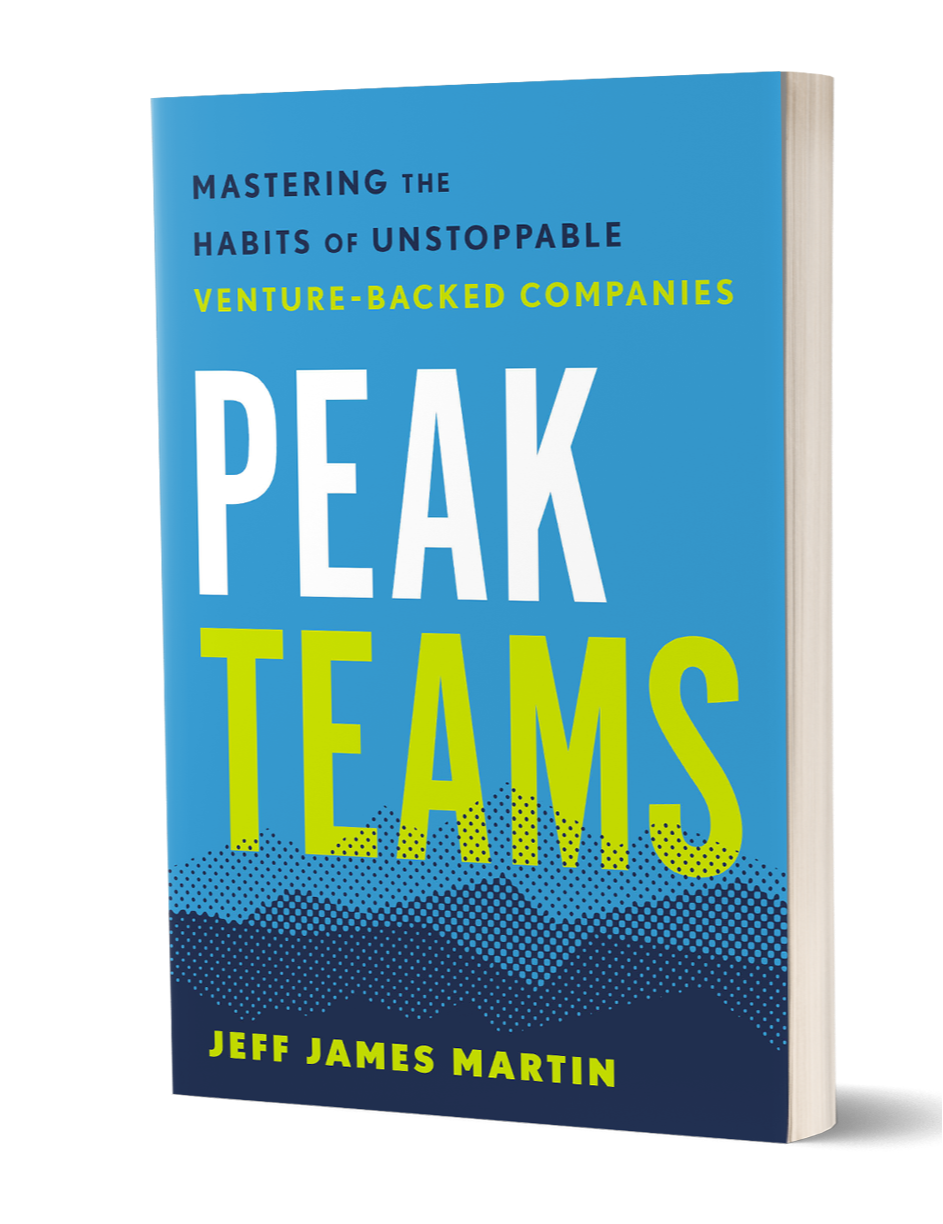
Peak Teams
Peak Teams is a practical leadership guide to the behaviors, operating rhythms, and habits that help organizations learn, adapt, and perform together as they grow.
Drawing from decades of work with founders, executives, and leadership teams, Jeff James Martin shows how leaders can strengthen alignment, accountability, visibility, and execution—even when there is no clear blueprint.
“The definitive playbook for high-growth and mission-critical organizations.”Michael Moe, Founder, Global Silicon Valley
For founders, CEOs, leadership teams, operators, coaches, boards, and investors navigating growth and organizational complexity.
The challenge behind the book
As organizations grow, the informal habits that once created speed and alignment are no longer enough. More people, priorities, functions, and dependencies require a more intentional way of working.
A small group shares context, communicates directly, and adjusts quickly without much formal structure.
Specialized teams and interdependent work make visibility, coordination, ownership, and learning harder to maintain.
They struggle because complexity increases faster than their ability to communicate, align, coordinate, learn, and execute together.
The Peak Teams framework
High-performing teams are not created by talent alone. They are built through shared behaviors that strengthen how people connect, communicate, align, learn, and act.
The five behaviors of Peak Teams are Symbiosis, Communication, Alignment, Learning, and Empowerment. Together, they create the conditions for stronger team performance and organizational execution.
Recognize that performance depends on the strength of the connections between people, teams, functions, and the broader organization.
Build trust, transparency, shared context, and the ability to have the conversations required for effective collaboration.
Connect people around common direction, priorities, ownership, expectations, and measures of success.
Reflect on results, gather feedback, test assumptions, and adjust as the team encounters new information and changing conditions.
Give people the clarity, authority, support, and accountability required to make decisions and act.
What readers will learn
Peak Teams helps leaders understand why team performance changes as organizations grow—and what they can do to maintain alignment, accountability, learning, and execution.
Keep people connected to shared direction and priorities as roles, functions, and organizational layers expand.
Strengthen ownership without creating a culture of control, blame, or leadership dependence.
Build the trust, context, and cross-functional visibility required for people to coordinate effectively.
Connect the repeatable Execution Cycle—Review → Learn → Plan → Act—with the cadence that keeps the team aligned, learning, and moving.
Move beyond isolated functional performance and coordinate the organization around shared outcomes.
Use feedback, reflection, and changing information to improve how the team works and what it chooses to do next.
Who should read Peak Teams?
The book is designed for people responsible for helping teams remain aligned, accountable, and effective through growth, uncertainty, transition, or organizational change.
Leaders working to preserve clarity, culture, accountability, and execution as the organization grows.
Executives who must coordinate priorities, decisions, ownership, and execution across functions.
People responsible for turning leadership direction into a coordinated operating rhythm.
Leaders strengthening communication, team development, leadership practices, and organizational health.
People seeking to understand the organizational conditions that support—or limit—execution.
Practitioners helping teams improve alignment, communication, accountability, and collective performance.
They apply wherever leaders must maintain alignment and execution through growth, uncertainty, rapid change, and increasing organizational complexity.
Why the lessons matter now
Rapid change, uncertainty, distributed work, and increasing specialization are making alignment and coordination harder to maintain across industries.
AI is changing how work is performed, which capabilities matter, and how quickly teams must learn and redesign their work.
Product cycles are shortening, assumptions expire faster, and organizations must adapt without losing strategic focus.
Hybrid and geographically dispersed work make shared context, trust, communication, and informal coordination harder to sustain.
Meaningful outcomes increasingly depend on several teams, disciplines, systems, and external partners working together.
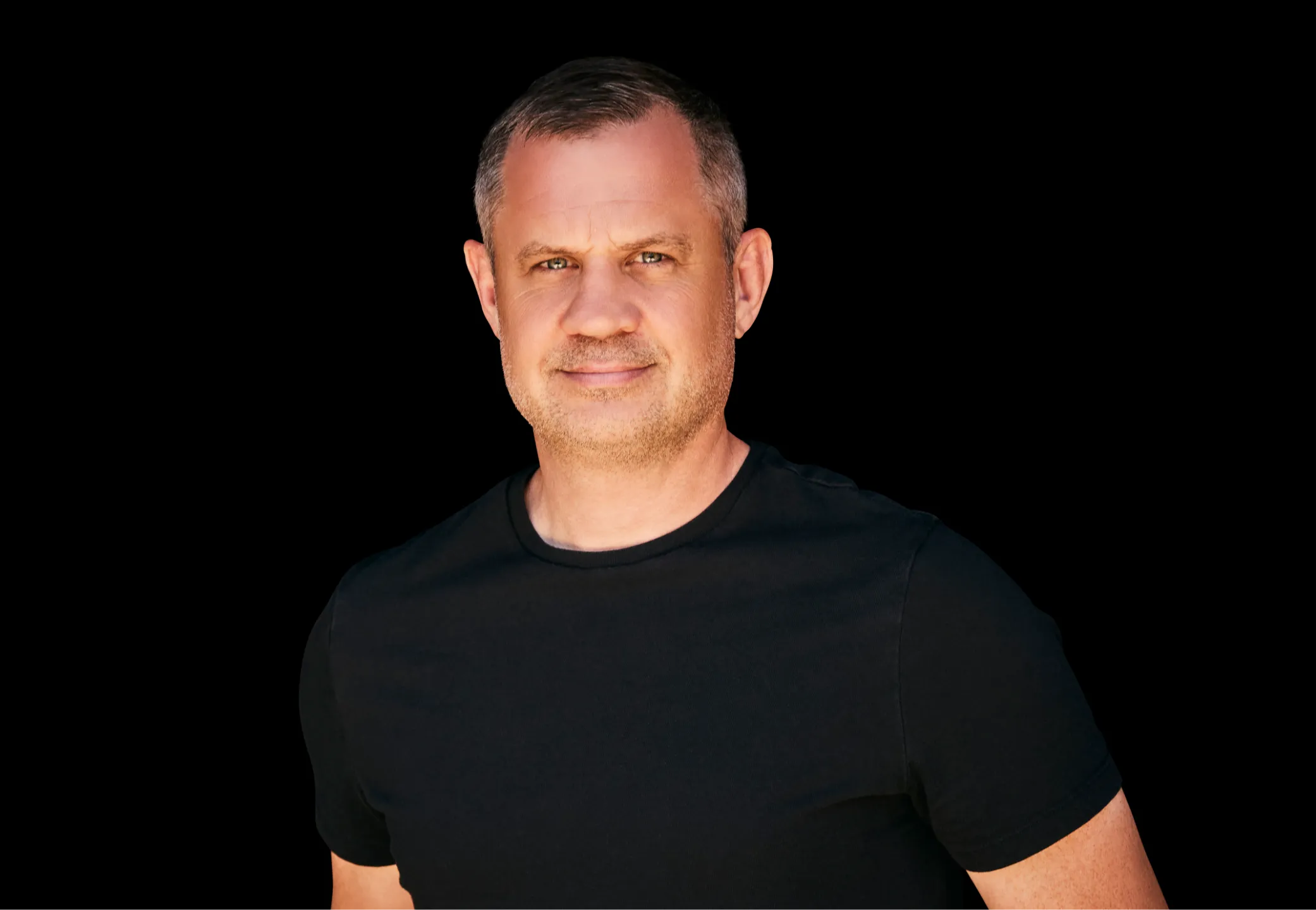
From Peak Teams to Peak OS
Jeff’s work with founders, executives, operators, and leadership teams revealed recurring patterns in how organizations succeed—or struggle—as complexity increases.
Those observations became the principles in Peak Teams. The principles then evolved into a more complete and repeatable operating system for connecting direction, alignment, execution, and learning across an organization.
Together, they provide a practical way to strengthen how people communicate, coordinate, make decisions, execute priorities, and learn from results.
Recurring behaviors emerged across hundreds of teams navigating growth, uncertainty, and change.
Those patterns became the five Peak Team behaviors and the core ideas explored in the book.
The principles were connected to planning, meetings, ownership, metrics, accountability, and learning.
The result is an organization-wide operating system designed to help teams execute better together.
Listen to Peak Teams
Hear Jeff James Martin explain why organizational complexity changes teams—and the behaviors leaders can strengthen to help people align, adapt, and execute together.
Explore why the communication and coordination patterns that work for a small team begin to break down as the organization grows.
Growth changes more than the size of the organization. It changes how people share context, make decisions, and work across teams.
Learn how Symbiosis, Communication, Alignment, Learning, and Empowerment reinforce one another.
High-performing teams build repeatable behaviors that allow people to coordinate and act without depending on constant intervention.
Hear how planning, meetings, decisions, accountability, and learning can become part of one connected rhythm.
Strong teams create a shared cadence for deciding what matters, reviewing progress, solving problems, and adapting together.
Endorsement
“The definitive playbook for high-growth and mission-critical organizations.”Michael Moe
The ideas were shaped through decades of work alongside founders, executives, operators, and leadership teams.
The book translates team performance into behaviors and leadership choices people can recognize and strengthen.
The lessons apply wherever teams must coordinate through growth, uncertainty, innovation, and increasing complexity.
Start reading
See how organizational complexity changes the way teams communicate, align, and execute—and why the practices that worked at one stage often stop working at the next.
Enter your information to access the complimentary chapter.
By submitting this form, you agree to receive the Peak Teams sample and occasional Collective Genius and Peak OS insights. You can unsubscribe at any time.
About the author
Jeff James Martin has spent more than two decades working with founders, CEOs, leadership teams, operators, boards, and investors navigating growth, complexity, and change.
Across hundreds of teams, Jeff observed a recurring pattern: organizations rarely lack talent or ambition. Their ability to coordinate, learn, and execute simply fails to keep pace with increasing organizational complexity.
Those lessons later became part of the foundation for Peak OS and Jeff’s broader work helping organizations execute better.
After the book
Peak Teams introduces the behaviors behind strong team performance. Peak OS provides several ways to apply those ideas across a leadership team or organization.
Explore the organization-wide operating system that connects direction, alignment, execution, and learning.
What Is Peak OS? →Bring the leadership team together around an immediate planning, alignment, funding, or execution need.
Explore Peak Sessions →Build and sustain the leadership habits, planning cycles, and operating rhythm required for stronger execution.
Explore Peak OS Coaching →Connect priorities, metrics, meetings, ownership, accountability, and visibility in one shared platform.
Explore Peak OS Software →Frequently asked questions
Learn more about the book, its audience, the five Peak Team behaviors, and how the ideas connect to Peak OS.
Peak Teams is a leadership and organizational-performance book about the behaviors and operating rhythms that help people align, learn, adapt, and execute as complexity increases.
The book is designed for founders, CEOs, leadership teams, operators, chiefs of staff, people leaders, board members, investors, coaches, and facilitators responsible for improving team and organizational performance.
No. Many of the stories come from venture-backed companies because they encounter growth and uncertainty early, but the lessons apply wherever leaders must maintain alignment and execution through increasing complexity.
The five behaviors are Symbiosis, Communication, Alignment, Learning, and Empowerment. Together, they strengthen how people connect, share context, coordinate, adapt, and take ownership.
It is designed as a practical guide. The book translates team performance into recognizable behaviors, leadership choices, and operating practices that leaders can apply to real teams.
Peak Teams focuses on the human behaviors behind strong team performance. Peak OS connects those behaviors to the broader systems, planning cycles, meetings, metrics, ownership, and operating rhythm of the organization.
Yes. The framework gives leadership teams shared language for discussing communication, alignment, accountability, learning, empowerment, and the way they operate together.
Yes. The principles apply to organizations that depend on people working across roles and functions toward shared outcomes, regardless of industry, ownership structure, or mission.
Audiobook excerpts are available on this page. Availability of the complete audiobook may vary by retailer and format.
Yes. Use the first-chapter form on this page to receive a complimentary sample by email.
The book is available through Amazon. Use the purchase button on this page to open the current Amazon listing.
Peak Teams focuses specifically on how team behaviors must evolve as organizational complexity increases. It connects communication, alignment, learning, empowerment, and interdependence to the practical challenge of executing through growth and change.
Build a team that can evolve
Peak Teams offers a practical framework for leaders navigating growth, uncertainty, and organizational complexity.
By Jeff James Martin · Amazon #1 Bestseller
Get research, practical frameworks, and insights on operating rhythm, leadership, alignment, organizational intelligence, and execution.

Get started today before this once in a lifetime opportunity expires.