
Why Organizational Systems Matter More as Companies Scale
Most founders think venture debt is about capital.
The best lenders know it is actually about execution.
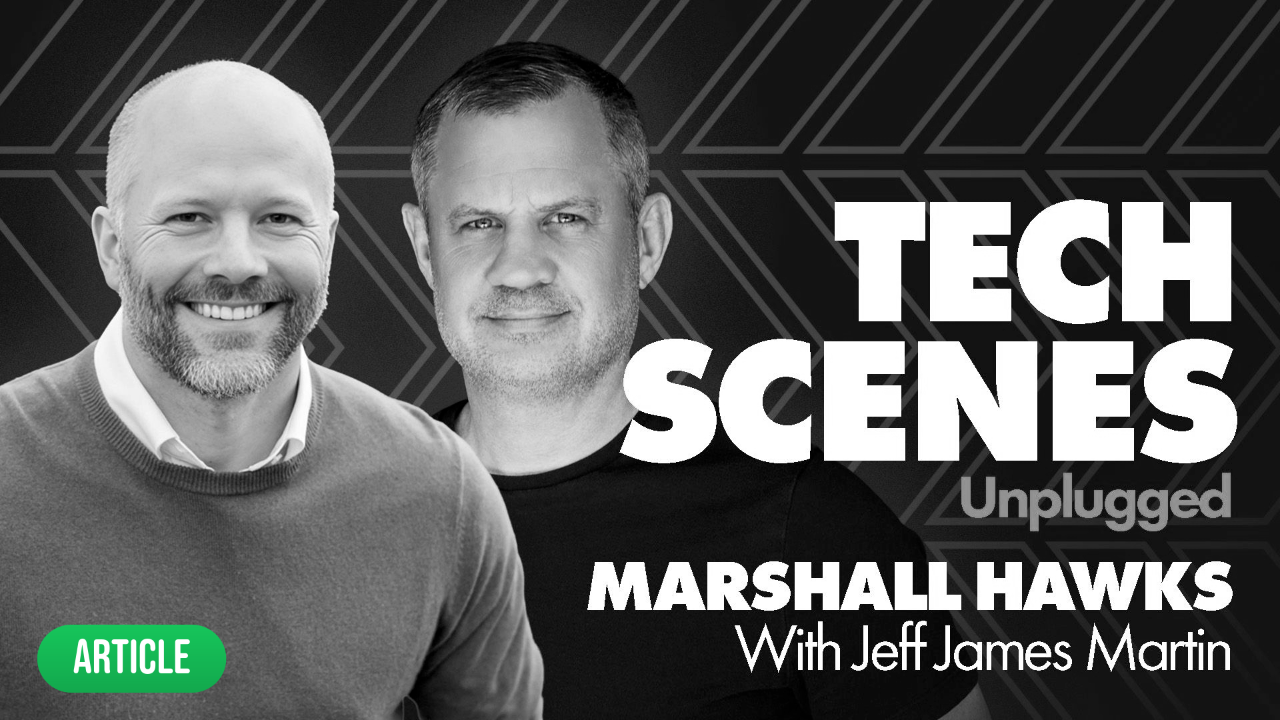
That was one of the strongest themes that emerged during a recent Tech Scenes conversation with Marshall Hawks, author of Venture Debt Deals and former Silicon Valley Bank executive.
You can watch the full Tech Scenes episode here:
Marshall spent more than two decades inside the venture banking and venture lending ecosystem, helping growth companies navigate one of the most misunderstood forms of startup financing.
But beneath the financial mechanics, the conversation revealed something much deeper:
Venture debt is often an operational bet on whether a company can execute.
Venture Debt Is Not Just About Raising More Money
One of the biggest misconceptions around venture debt is that it exists simply to give startups additional cash.
In reality, venture debt is usually designed to help a company extend runway long enough to achieve meaningful operational milestones.
Marshall described venture debt as a tool intended to help companies:
-
extend runway
-
reduce dilution
-
achieve growth milestones
-
increase future valuation potential
-
create more operational leverage from existing equity capital
That distinction matters.
The goal is not simply “more money.”
The goal is using capital to create enough organizational progress that the next equity round happens from a stronger position.
This is why venture debt is often most effective for companies that already have:
-
product-market traction
-
operational clarity
-
measurable momentum
-
line of sight to growth milestones
-
strong execution capability
The companies struggling operationally are often the ones most likely to misuse venture debt.
Banks Are Not Just Picking Winners
One of the most interesting insights Marshall shared was how venture banks actually think.
Most founders assume lenders are trying to identify the next billion-dollar company.
In reality, many venture banks are primarily evaluating something different:
Can this company continue accessing future capital?
Marshall explained that many banks use venture debt partly as customer acquisition financing.
The bank wants to build a long-term relationship with companies and founders that may last far beyond the duration of the debt itself.
That changes how lenders evaluate risk.
They are often looking at:
-
investor quality
-
leadership capability
-
fundraising potential
-
operational momentum
-
organizational maturity
-
execution credibility
Much of the underwriting process becomes a question of:
“Can this organization continue progressing toward the next milestone?”
That is fundamentally an operational question.
The Real Risk Is Organizational Misalignment
One of the strongest operational themes throughout the conversation was the danger of using venture debt without operational clarity.
Marshall described one of the biggest red flags in venture lending as companies borrowing simply to “buy more time” without a clear plan for what milestones the organization intends to accomplish.
This is where many companies get into trouble.
Capital alone does not fix:
-
poor alignment
-
weak communication
-
unclear ownership
-
organizational dysfunction
-
lack of execution rhythm
In many cases, additional capital simply amplifies operational inefficiency.
The organizations that benefit most from venture debt usually already have:
-
clear objectives
-
measurable priorities
-
operational cadence
-
leadership alignment
-
accountability systems
-
strong execution loops
This is one reason organizational operating systems matter so much in growth companies.
Without operational coordination, financial leverage becomes dangerous leverage.
High-Performing Teams Operate Differently
One of the most interesting parts of the discussion shifted beyond finance entirely.
The conversation turned toward how high-performing organizations actually function internally.
Marshall discussed how experienced lenders evaluate more than spreadsheets when meeting leadership teams.
They evaluate:
-
team dynamics
-
communication quality
-
leadership trust
-
organizational chemistry
-
execution confidence
In many cases, experienced lenders can feel whether a team is highly functional within minutes of entering an office.
Marshall referenced early experiences working with Airbnb and how different the organizational energy felt compared to many other companies.
That difference often appears in:
-
shared mission
-
operational synchronization
-
leadership trust
-
organizational clarity
-
coordinated execution
This reinforces something many operators already know:
Execution is rarely just about strategy.
It is about how humans function together under pressure.
Great Companies Build Operational Rhythm
One of the clearest themes in the conversation was the importance of organizational operating rhythm.
Growth companies are not static organizations.
They are constantly navigating:
-
uncertainty
-
iteration
-
experimentation
-
changing priorities
-
evolving market conditions
That requires recurring systems for:
-
alignment
-
communication
-
learning
-
accountability
-
prioritization
-
execution review
Without those systems, organizations drift.
This becomes even more important when companies take on outside capital.
Because once capital enters the business, time pressure increases.
Milestones matter more.
Execution timelines matter more.
Coordination matters more.
This is why the strongest growth companies often develop recurring operational cadence long before they become large organizations.
Venture Debt Works Best When Teams Already Know How to Execute
One of the clearest takeaways from the conversation is that venture debt is not a substitute for organizational execution.
It is an amplifier of it.
For strong companies with:
-
operational clarity
-
measurable momentum
-
aligned leadership
-
healthy learning loops
-
coordinated execution
venture debt can become an extremely valuable tool.
For organizations lacking those foundations, it can create additional pressure without solving the underlying problems.
That distinction is critical.
Because in growth companies, capital does not create execution.
Execution creates the conditions where capital becomes useful.
Why Organizational Systems Matter More as Companies Scale
As companies grow, complexity compounds quickly.
Communication layers increase.
Teams specialize.
Decision-making slows.
Visibility decreases.
This is where many organizations begin struggling operationally long before they struggle financially.
The companies that scale best are usually not the companies with the most activity.
They are the companies with the strongest coordination systems.
This is why more growth companies are investing in:
-
operating systems
-
OKR cadence
-
leadership alignment
-
recurring planning rhythms
-
execution visibility
-
team-of-teams coordination
The faster organizations move, the more important synchronized execution becomes.
Frequently Asked Questions
What is venture debt?
Venture debt is a form of financing used by growth companies alongside venture capital to extend runway, reduce dilution, and help achieve operational milestones before the next equity raise.
When should startups use venture debt?
Venture debt is usually most effective when companies already have operational momentum, measurable growth milestones, and a clear plan for how the capital will accelerate execution.
Why is venture debt risky?
Venture debt can become risky when companies use it without operational clarity, measurable milestones, or strong execution systems. Additional capital does not solve organizational dysfunction.
How do venture lenders evaluate startups?
Lenders typically evaluate:
-
leadership teams
-
investor quality
-
fundraising potential
-
operational momentum
-
execution capability
-
organizational stability
Why does organizational execution matter in venture-backed companies?
Execution determines whether companies can achieve the milestones necessary for future fundraising, growth, and long-term scalability.
What is operating rhythm?
Operating rhythm is the recurring cadence organizations use to maintain alignment, accountability, visibility, and coordinated execution across teams.
Related Concepts
-
Venture Debt
-
Organizational Execution
-
Operating Rhythm
-
Leadership Alignment
-
Startup Financing
-
Team-of-Teams Coordination
-
Organizational Synchronization
-
Growth Company Operations
-
Venture Capital Strategy
Related Insights from Tech Scenes
Many of the operational themes discussed in this conversation with Marshall Hawks connect directly to broader changes happening across modern growth companies.
Additional related insights from Tech Scenes include:
-
Why Growth Companies Need Faster Organizational Learning Loops
-
Why Growth Companies Need Operating Systems That Reduce Founder Isolation
-
Why AI Is Forcing Growth Companies to Rethink Their Operating Systems
Together, these conversations reinforce a broader pattern emerging across modern organizations:
The companies that scale best are increasingly the ones capable of combining capital efficiency, leadership alignment, organizational learning, and coordinated execution.
Related Resources
Venture Debt Deals
Marshall Hawks’ book explores:
-
how venture debt works
-
venture lending structures
-
startup financing strategy
-
lender decision-making
-
venture debt term sheets
-
operational considerations for founders
The book provides a practical framework for understanding one of the most misunderstood areas of startup finance.
Peak Teams – Mastering the Habits of Unstoppable Venture-Backed Companies
Peak Teams – Mastering the Habits of Unstoppable Venture-Backed Companies
Peak Teams explores many of the operational execution concepts discussed throughout this article, including:
-
operating rhythm
-
leadership coordination
-
organizational synchronization
-
measurable alignment
-
team execution
-
scaling complexity
Collective Genius
Collective Genius helps growth companies strengthen:
-
organizational execution
-
leadership alignment
-
operating cadence
-
execution visibility
-
team coordination
-
scaling systems
Peak OS Software
Peak OS is an organizational execution platform designed to help growth companies create:
-
measurable alignment
-
recurring operational rhythm
-
execution visibility
-
OKR management
-
team synchronization
-
leadership coordination
