
Why AI Is Forcing Growth Companies to Rethink Their Operating Systems
Why AI Is Forcing Growth Companies to Rethink Their Operating Systems
Most founders are still thinking about AI as a productivity tool.
The companies moving fastest are treating AI as an organizational transformation.
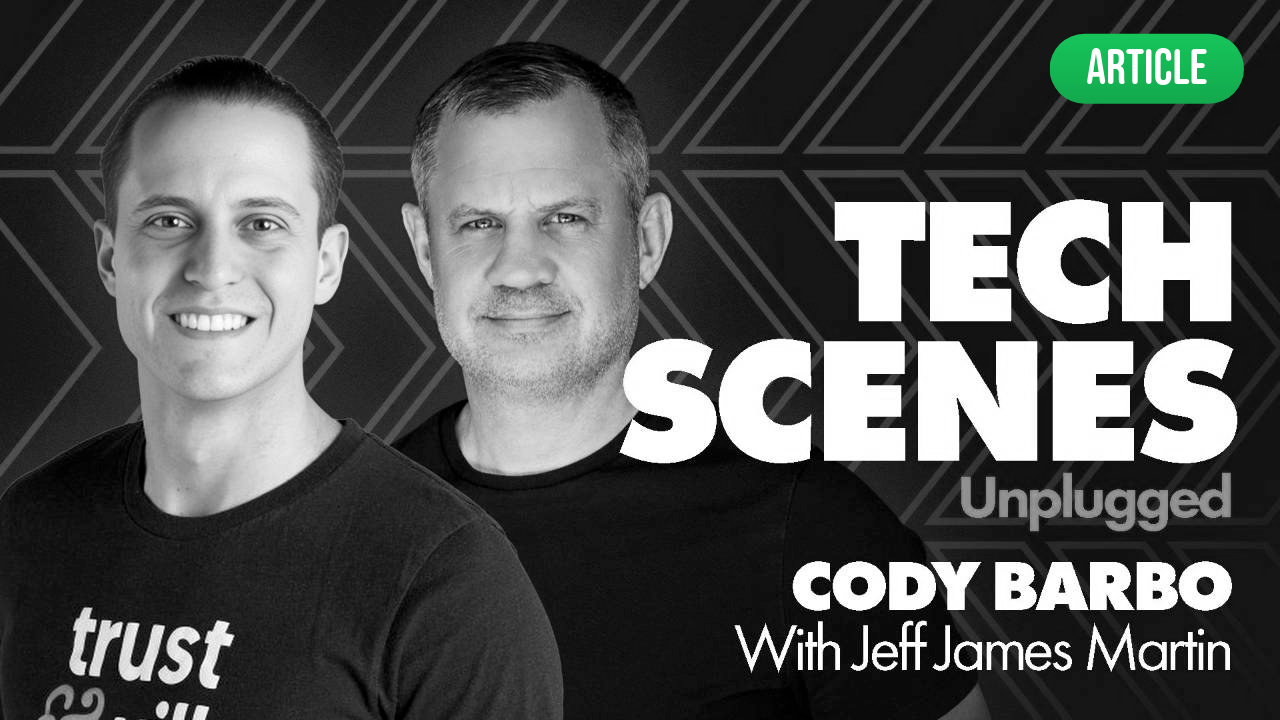
That was one of the strongest themes that emerged during a recent Tech Scenes conversation with Cody Barbo, co-founder and CEO of Trust & Will.
You can watch the full Tech Scenes episode here:
Trust & Will has grown from an early-stage startup into one of the leading digital estate planning platforms in the United States, helping hundreds of thousands of families navigate wills, trusts, probate preparation, and estate planning digitally.
But one of the most important parts of the conversation was not about estate planning.
It was about organizational evolution in the AI era.
The Companies Most At Risk May Be the Most Successful
One of the most interesting observations Cody shared was how he views the wealth-tech landscape.
In his view, there are now three categories of companies:
-
legacy technology companies
-
modern technology companies
-
AI-native companies
Legacy companies may have billions in revenue, but many were not built for rapid AI transformation.
Modern technology companies — like Trust & Will — have better infrastructure, modern engineering practices, and more adaptable teams.
But even modern technology companies are now facing a new reality:
Being modern is no longer enough.
Cody described a growing concern that many founders are starting to feel:
If companies do not aggressively evolve toward becoming AI-native organizations, entirely new competitors may emerge from AI-first environments with dramatically different operational leverage.
This is one of the defining business shifts happening right now.
AI is not simply creating better tools.
It is changing:
-
execution speed
-
product development
-
organizational learning
-
customer support
-
operational leverage
-
company design itself
AI Acceleration Is Increasing Organizational Complexity
One of the biggest misconceptions about AI is that it automatically simplifies organizations.
In reality, many growth companies are experiencing the opposite.
AI dramatically increases the speed of:
-
experimentation
-
iteration
-
product changes
-
internal communication
-
decision-making
-
operational possibilities
This creates a new leadership challenge.
Organizations can now change direction faster than ever before.
But faster movement does not automatically create alignment.
In many companies, AI is accelerating organizational noise faster than leadership systems can absorb it.
This is why operating systems are becoming increasingly important in AI-native organizations.
The faster organizations move, the more they require:
-
operating rhythm
-
measurable alignment
-
decision clarity
-
cross-functional visibility
-
execution coordination
Without those systems, organizations can quickly become reactive.
Teams begin chasing opportunities without shared prioritization.
Departments iterate independently.
Leadership struggles to maintain visibility across the business.
AI increases leverage.
But it also increases the need for organizational synchronization.
Modern Founders Need Organizational Systems
One of the strongest themes throughout the conversation was Cody’s focus on systems thinking as Trust & Will scaled.
In the early stages, the company operated with relatively lightweight coordination systems:
-
Slack
-
email
-
daily standups
-
small in-office collaboration
That worked while the organization remained small.
But as Trust & Will scaled from:
-
5 employees
to -
20 employees
to -
80 employees
to -
130+ employees
the organization required more sophisticated operating systems.
Cody described how the company evolved:
-
leadership structure
-
meeting cadence
-
communication systems
-
operational visibility
-
chief of staff functions
-
executive coordination layers
This is one of the most important scaling transitions inside growth companies.
At a certain stage, founders can no longer rely purely on instinct and direct communication.
Organizations require structured coordination systems capable of supporting team-of-teams execution.
This is where many companies begin struggling.
Some organizations create too much process.
Others avoid systems entirely.
The challenge is creating the right level of operating rhythm for the organization’s stage of growth.
Why Organizational Simplicity Matters More Than Ever
One of the most insightful parts of the conversation centered around simplicity.
Despite scaling rapidly, Cody repeatedly emphasized the importance of reducing unnecessary complexity.
Even as the company added:
-
executives
-
departments
-
systems
-
tools
-
communication layers
he continued asking:
“How do we keep things simple?”
This is increasingly important in AI-native organizations.
AI creates the temptation to:
-
add more tools
-
automate everything
-
increase operational layers
-
move faster constantly
But operational complexity compounds quickly.
Strong operating systems are not simply about adding more structure.
They are about creating:
-
clarity
-
visibility
-
alignment
-
prioritization
-
coordinated execution
without overwhelming the organization.
This is one reason many modern growth companies are now rethinking:
-
meeting cadence
-
communication systems
-
documentation structure
-
operational workflows
-
AI integration strategy
The goal is not maximum activity.
The goal is synchronized execution.
AI-Native Companies Will Operate Differently
One of the biggest ideas discussed in the episode was the concept of becoming AI-native.
Not AI-assisted.
AI-native.
That distinction matters.
AI-native organizations increasingly rethink:
-
workflows
-
product development
-
communication
-
decision-making
-
customer interaction
-
organizational design itself
Cody described how Trust & Will is actively working toward becoming an AI-native estate planning platform instead of waiting for competitors to redefine the category first.
This mindset is becoming increasingly common among modern growth companies.
Founders are realizing that AI may not simply improve existing businesses.
It may completely reshape:
-
operational leverage
-
company size
-
speed of execution
-
team structures
-
organizational economics
This is why many leaders are now asking deeper operational questions:
What does an AI-native operating system look like?
How should organizations coordinate execution when teams can move exponentially faster?
What systems help organizations maintain signal as AI accelerates complexity?
These questions are becoming central to modern organizational design.
The Future Will Belong to Coordinated Organizations
One of the clearest patterns emerging across growth companies is this:
The organizations that scale best in the AI era will likely not be the ones with the most activity.
They will be the ones with the strongest coordination systems.
As AI increases execution speed, organizations increasingly require:
-
operating rhythm
-
measurable alignment
-
organizational visibility
-
execution synchronization
-
team-of-teams coordination
Without those systems, speed eventually turns into fragmentation.
The future may belong to companies capable of combining:
-
AI leverage
with -
human coordination systems
That combination may become one of the defining competitive advantages of the next decade.
Many of the organizational themes discussed in this article align closely with the work behind Collective Genius Peak OS and the ideas explored in Peak Teams – Mastering the Habits of Unstoppable Venture-Backed Companies.
Frequently Asked Questions
What is an AI-native company?
An AI-native company is an organization designed around AI-first workflows, systems, decision-making, and operational leverage rather than simply adding AI tools onto existing processes.
Why do growth companies need operating systems?
As organizations scale, communication complexity and execution dependencies increase. Operating systems help organizations maintain alignment, visibility, accountability, and coordinated execution.
How does AI increase organizational complexity?
AI accelerates experimentation, iteration, communication, and operational change. Without strong coordination systems, organizations can quickly become fragmented and reactive.
What is operating rhythm?
Operating rhythm is the recurring cadence organizations use to maintain alignment and coordinated execution through priorities, meetings, metrics, planning, and execution review.
Why is organizational synchronization important?
Organizational synchronization helps teams maintain visibility, coordination, and alignment as complexity increases across departments and functions.
How are AI-native companies changing organizational design?
AI-native companies increasingly rethink workflows, staffing models, product development cycles, communication systems, and operational leverage through AI-first infrastructure and processes.
Related Concepts
-
AI-Native Organizations
-
Organizational Execution
-
Operating Rhythm
-
Organizational Synchronization
-
Team-of-Teams Coordination
-
Founder Systems
-
Cross-Functional Visibility
-
AI Operational Leverage
-
Modern Operating Systems
Related Insights from Tech Scenes
Many of the operational themes discussed in this conversation with Cody Barbo connect directly to broader changes happening across modern growth companies.
As AI accelerates execution speed, organizations are increasingly facing:
-
leadership complexity
-
organizational learning challenges
-
founder isolation
-
cross-functional coordination pressure
-
operational overload
Additional related insights from Tech Scenes include:
-
Why AI Makes Leadership More Important — Insights from Tech Scenes with Executive Coach Brian Wang
-
Why Growth Companies Need Faster Organizational Learning Loops
-
Why Growth Companies Need Operating Systems That Reduce Founder Isolation
Together, these conversations reinforce a broader pattern emerging across modern organizations:
As AI increases leverage and complexity simultaneously, growth companies increasingly need stronger operating rhythm, measurable alignment, organizational visibility, and execution systems capable of helping teams scale together without losing synchronization.
Related Resources
Peak Teams – Mastering the Habits of Unstoppable Venture-Backed Companies
Peak Teams – Mastering the Habits of Unstoppable Venture-Backed Companies
Peak Teams explores many of the organizational execution concepts discussed throughout this article, including:
-
operating rhythm
-
organizational synchronization
-
measurable alignment
-
leadership coordination
-
team-of-teams execution
-
scaling operational complexity
The book focuses on how modern growth companies can maintain clarity, alignment, and execution momentum as organizations scale.
Collective Genius
Collective Genius works with growth companies to strengthen:
-
operating systems
-
leadership alignment
-
organizational execution
-
team coordination
-
cross-functional visibility
-
execution cadence
The organization supports founders, CEOs, and leadership teams navigating the transition from founder-led execution to scalable operational systems.
Peak OS Software
Peak OS is a modern organizational execution platform designed to help growth companies create:
-
measurable alignment
-
recurring operating rhythm
-
organizational visibility
-
coordinated execution
-
OKR management
-
team-of-teams synchronization
Peak OS combines software, operational methodology, and leadership systems to help organizations scale without losing clarity or alignment.
Additional Tech Scenes Conversations
Tech Scenes explores how founders, CEOs, investors, and operators think about:
-
organizational scaling
-
AI transformation
-
leadership evolution
-
operational systems
-
execution strategy
-
modern company building
Additional episodes and operational insights can be found here:
