Why Great Investors Bet on Founders Before Markets
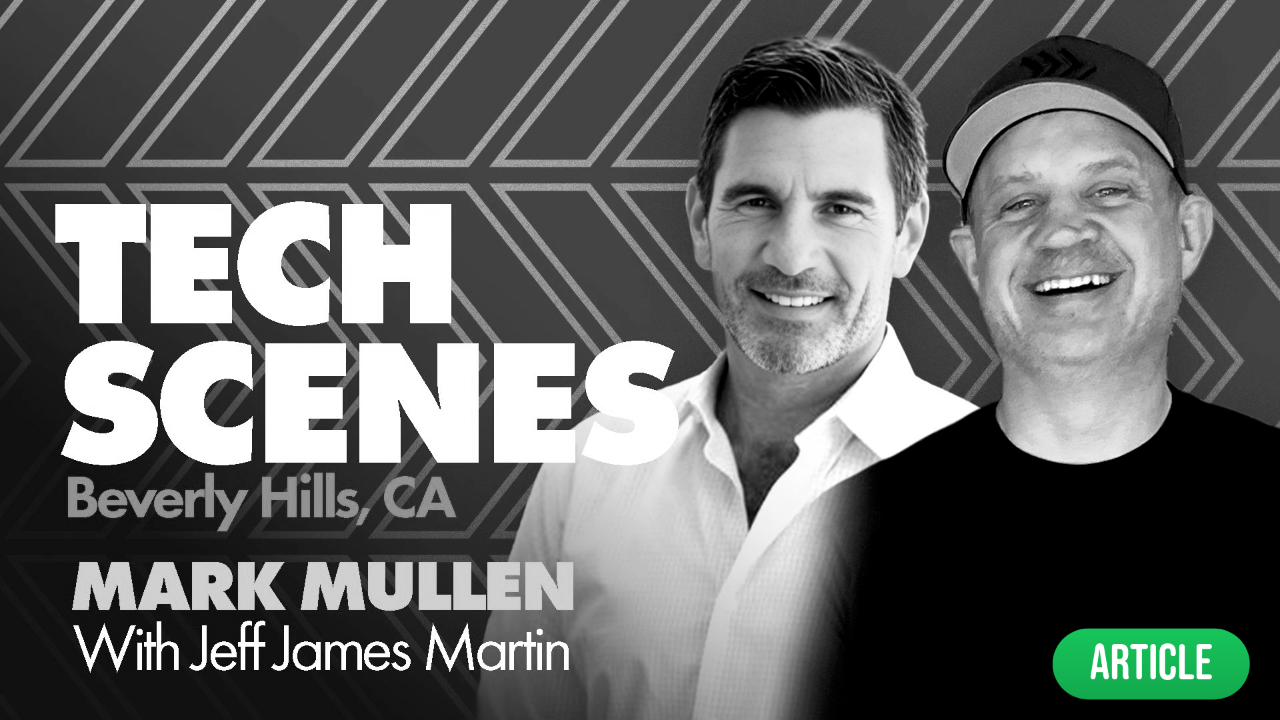
Insights from Tech Scenes Beverly Hills with Mark Mullen, Co-Founder of Bonfire Ventures
One of the most common questions in entrepreneurship is whether great companies are created by great markets or great founders. While both matter, my conversation with Mark Mullen, Co-Founder of Bonfire Ventures, highlighted a perspective that many experienced investors eventually reach after decades of investing: founders matter more.
At the earliest stages of company building, information is limited. There is no significant revenue history. There are few customers. Product-market fit may still be emerging. The competitive landscape can change overnight. Because so much uncertainty exists, investors are often forced to make decisions based less on spreadsheets and more on people.
For Mark and the team at Bonfire Ventures, investing at the seed stage means evaluating potential long before outcomes become visible. Unlike later-stage investors who can analyze years of financial performance, customer retention data, and operating metrics, seed investors are largely evaluating the founder's ability to learn, adapt, execute, and solve problems that have not yet appeared.
This reality creates an important lesson for founders. Investors are not simply evaluating the product. They are evaluating the person who will need to navigate hundreds of challenges over the next decade. Markets shift. Technology changes. Competitors emerge. Business models evolve. The founder is often the only constant.
Many entrepreneurs believe success comes from having the perfect idea. In reality, startup history repeatedly shows that ideas evolve significantly as companies grow. What often determines success is not the original concept but the founder's ability to learn faster than competitors and adapt faster than the market.
This is one reason experienced investors place so much emphasis on founder quality. The best founders are not necessarily the smartest people in the room. They are often the most resilient. They can absorb new information, change course when necessary, make difficult decisions, and continue moving forward when circumstances become difficult.
As companies scale, founder capability becomes even more important. Early-stage organizations frequently operate with limited resources, incomplete information, and constant uncertainty. The founder must make decisions across hiring, fundraising, product development, customer acquisition, strategy, and culture. Few people begin their entrepreneurial journey prepared for all of these responsibilities.
This is why company building is ultimately a craft.
Like any craft, it improves through repetition, experience, and deliberate practice. Great founders develop judgment over time. They learn how to recruit talent, allocate resources, communicate vision, manage complexity, and build teams. These capabilities are rarely present on day one. They are developed through experience.
One of the most important transitions founders make is learning that they cannot remain the operating system of the company forever. In the earliest stages, founders often make every decision, approve every initiative, and manage every important relationship. As organizations grow, this approach eventually creates bottlenecks.
The strongest companies develop systems that allow leadership to scale.
Teams need clarity.
Executives need ownership.
Information needs structure.
Decision-making needs rhythm.
Accountability needs visibility.
Without these elements, growth eventually creates confusion instead of momentum.
This is why operational frameworks become increasingly valuable as organizations mature. The founder remains responsible for vision and direction, but execution becomes distributed across the leadership team.
Organizations that successfully navigate this transition often outperform those that remain dependent on founder heroics.
The lesson applies beyond startups. Every growing organization eventually faces a choice between scaling through individuals or scaling through systems. The most durable companies learn to do both.
Great founders inspire people.
Great systems align people.
Great founders create momentum.
Great systems sustain momentum.
Great founders build companies.
Great systems help those companies endure.
The best investors understand this distinction. They are not simply looking for someone who can launch a company. They are looking for someone who can continuously evolve as the company grows.
Ultimately, startup success is rarely about predicting the future perfectly.
It is about finding founders who can navigate whatever future arrives.
That may be why the most successful investors continue betting on people first.
Questions and Answers
Why do seed investors focus so heavily on founders?
Seed-stage companies have limited operating history, making founder capability one of the strongest indicators of future success.
What characteristics make a great founder?
Adaptability, resilience, learning ability, judgment, leadership, and execution discipline are often more important than the original idea.
Why is founder development important as companies scale?
As organizations grow, founders must evolve from individual contributors into leaders capable of building teams, systems, and organizational structure.
Can a great founder succeed in an imperfect market?
Many successful companies were built by founders who adapted and discovered opportunities that were not obvious at the beginning.
Why do companies eventually need systems?
Growth creates complexity. Systems help maintain alignment, accountability, communication, and execution as teams expand.
How does this relate to organizational performance?
Organizations perform best when strong leadership is combined with clear operating systems and effective execution frameworks.
Related Insights
What Is Organizational Execution?
What Is Organizational Intelligence?
What Is a Business Operating System?
About the author
Jeff James MartinCEO and Founder, Collective Genius
Jeff James Martin is the Founder and CEO of Collective Genius, creator of Peak OS, and author of Peak Teams. He works with growth and mission-critical organizations to improve alignment, accountability, execution, and team performance. Over the past two decades, Jeff has helped hundreds of founders, executives, and leadership teams build stronger operating rhythms and scale through increasing complexity. He is also the host of Tech Scenes, where he interviews founders, investors, and operators on leadership, innovation, and organizational performance.
About Peak OS
Peak OS is the operating system for organizational execution. Designed for growth-stage and mission-critical organizations, Peak OS helps leadership teams align priorities, establish operating rhythm, improve accountability, and maintain visibility as organizational complexity increases. By creating a consistent framework for communication, planning, and execution, Peak OS helps teams reduce execution drift and turn strategy into measurable outcomes. Learn more: Collective Genius
About Collective Genius
Collective Genius helps founders, executive teams, and growing organizations improve organizational execution through leadership coaching, operating systems, strategic facilitation, and Team-of-Teams alignment. Our work focuses on helping organizations scale without losing clarity, accountability, communication, or momentum. Learn more: Collective Genius
About Peak Teams
Peak Teams: Mastering the Habits of Unstoppable Venture-Backed Companies explores the leadership habits, operating rhythms, accountability systems, and execution principles used by high-performing organizations. The book provides practical frameworks for leaders seeking to build aligned teams and execute consistently as complexity grows. Learn more: Peak Teams book
Learn More
Explore additional insights on organizational execution, operating rhythm, leadership, team alignment, business operating systems, artificial intelligence, and the future of work through the Collective Genius Insights platform. Visit: Collective Genius Insights
Music by Andrew Applepie - https://soundcloud.com/andrewapplepie
