Tech Scenes at Enterprise Rising 2026: Founder Lessons from Builders, Operators, and Investors
Some startup conversations are best captured in a single interview.
Others are better understood through a room.
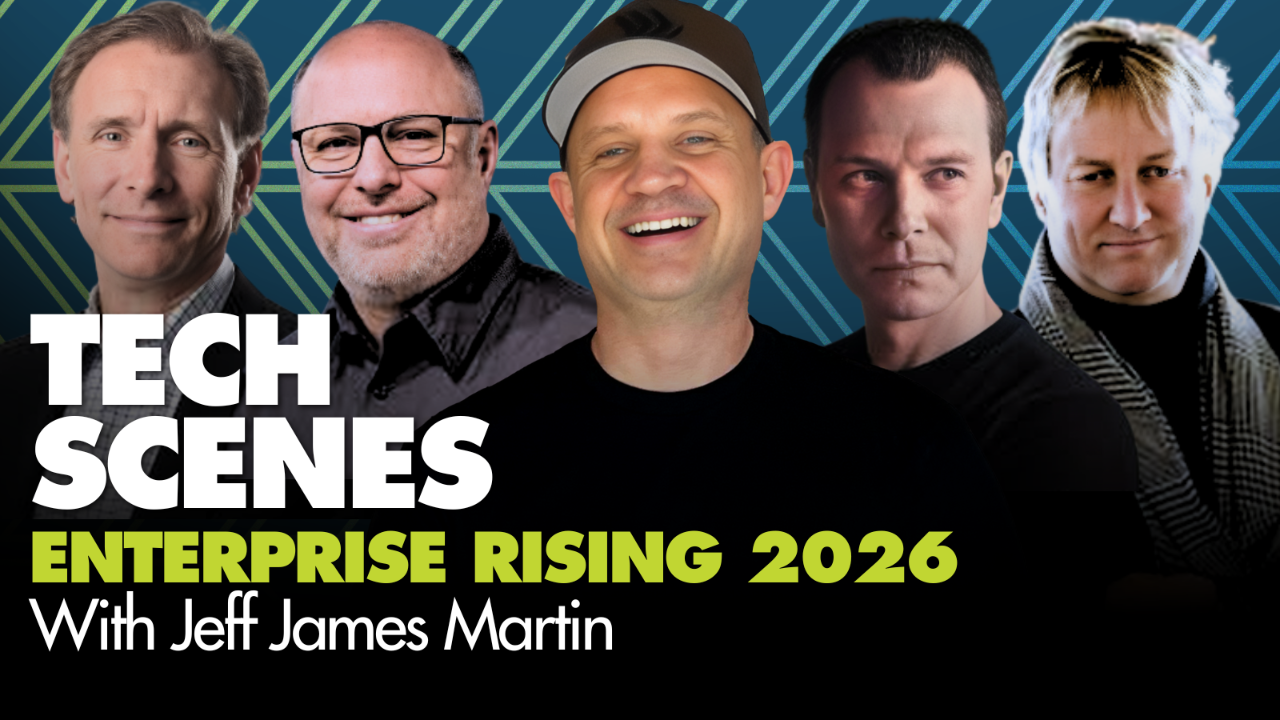
This episode of Tech Scenes comes from Enterprise Rising and brings together a series of conversations with founders, operators, investors, and company builders who have lived different versions of the same entrepreneurial journey.
The episode features:
Andre “Dre” Creighton, Tech Co-Founder and Chief Financial Officer
Dick Polipnick, VP at GoRout
Doug Berg, Serial Entrepreneur and Founder of Match2
Joe Keeley, Coach, Entrepreneur, and CEO
John Sundberg, Founder of Kinetic Data
Jon Maichel Thomas, Co-Founder of MadeDaily
Michael Gorman, Co-Founder of Cascade Reading and Tech Investor
Scott Burns, Investor and Serial Entrepreneur
Mark Lacek, Serial Entrepreneur
Together, these conversations create a practical look at what it takes to build companies, lead through uncertainty, raise and deploy capital wisely, create meaningful products, and stay connected to the realities of entrepreneurship.
The themes that emerged were not abstract.
They were grounded in experience.
Company building is hard.
Founders need community.
Execution matters.
Financial discipline matters.
Technology alone is not enough.
Great companies are built by people who keep learning, keep adapting, and keep surrounding themselves with other serious builders.
That is why Enterprise Rising is such a valuable setting for Tech Scenes. It brings founders and operators into the same environment to discuss the work behind the work: the decisions, systems, relationships, and disciplines that help companies endure.
Watch the full episode on:
Spotify: https://open.spotify.com/episode/22sNFBI7igZsYojTa7EO7i?si=9mvSvxl6QBOlMA_tTTNZyQ
YouTube: https://youtu.be/oJXcm5v0tbc?si=VBLErb6C2mVqM9rc
The Value of Serious Founder Rooms
Startup events often focus on visibility.
Speakers. Panels. Sponsors. Networking. Momentum.
Those things can be useful, but the most valuable startup communities usually create something deeper.
They create rooms where serious founders can have serious conversations.
Enterprise Rising represents that kind of room.
The founders and operators in this episode are not simply talking about startup theory. They are talking from lived experience. They have built companies, managed teams, raised money, missed targets, solved customer problems, changed direction, and learned lessons that only come from doing the work.
That kind of knowledge is difficult to capture in a playbook.
It moves through conversation.
It moves through stories.
It moves through peers who are willing to be honest about what actually happens inside companies.
This is one reason founder communities matter so much. Entrepreneurship can be isolating. Even when founders are surrounded by employees, investors, advisors, and customers, they often carry responsibilities that are hard to fully explain to people outside the journey.
The right room reduces that isolation.
It gives founders access to people who understand the terrain.
It creates the conditions for faster learning.
And in many cases, it helps founders avoid mistakes they would otherwise have to learn the hard way.
Company Building Requires More Than Ambition
A recurring theme across founder conversations is that ambition is necessary, but not sufficient.
Every entrepreneur starts with ambition.
They see an opportunity.
They believe something should exist.
They imagine a better product, better process, better market, or better future.
But ambition alone does not build a durable company.
Companies require operating discipline.
They require financial clarity.
They require teams that can execute.
They require customers who care enough about the problem to pay for the solution.
They require leaders who can make decisions before certainty exists.
The entrepreneurs in this episode represent different stages and angles of that journey. Some bring finance and operating experience. Some bring technical company-building experience. Some bring investor perspective. Some bring coaching, leadership, and founder-development experience. Some bring the scar tissue of building multiple companies over time.
The collective message is clear.
Startups are not built by inspiration alone.
They are built through repeated decisions, difficult tradeoffs, and the discipline to keep learning while conditions change.
Why Financial Discipline Matters Earlier Than Founders Think
Many founders wait too long to build financial discipline into the company.
In the earliest stages, speed often feels more important than structure. Founders are trying to win customers, build the product, hire the team, raise capital, and survive. Financial systems can feel like something the company will formalize later.
But the later a company builds financial discipline, the harder it becomes to scale.
A company can be growing and still lack clarity.
It can be generating revenue and still not fully understand the economics of its business.
It can have strong customer interest and still struggle with cash management, forecasting, margins, or capital allocation.
That is why the CFO and operator perspective is so important in founder environments.
Finance is not just reporting.
Finance is decision support.
It helps founders understand what is working, what is not working, where capital is going, and which choices create the strongest path forward.
In a more disciplined funding environment, this matters even more. Investors increasingly want to understand not only whether a company can grow, but whether it can grow intelligently.
Growth without financial visibility creates risk.
Growth with financial visibility creates confidence.
The Best Founders Learn From Operators
One of the most valuable parts of Enterprise Rising is the mix of founders, operators, and investors.
Founders benefit from hearing from people who have built before.
Operators bring a practical lens. They understand what it takes to move from vision to execution. They know that strategy only becomes valuable when teams can turn it into action. They know that hiring, process, customer delivery, communication, and accountability often determine whether a company can scale.
This is especially important for early-stage founders.
In the beginning, the founder often serves as the operating system of the company. They make decisions, hold context, manage priorities, drive execution, and connect every part of the business.
That works for a while.
Then complexity increases.
More people join.
More customers arrive.
More functions emerge.
The founder can no longer keep everything connected through personal effort alone.
This is where founders need operating discipline.
They need systems for alignment.
They need visibility into what is happening.
They need leadership rhythms.
They need ways to make decisions, track progress, and resolve issues before friction turns into drift.
Operators often see these challenges sooner because they have lived through them.
Community Accelerates Pattern Recognition
Experienced founders and investors often develop pattern recognition over time.
They begin to recognize the difference between a real market signal and noise.
They can tell when a team is moving quickly but not coherently.
They can spot when a founder is avoiding a decision.
They can identify when a company has strong product energy but weak operating discipline.
They can sense when the business is ready to scale and when it is still missing fundamentals.
The challenge is that pattern recognition usually takes years to develop.
Communities accelerate that learning.
When founders hear multiple experienced builders describe similar lessons, they begin to recognize patterns earlier. They learn not only from their own experience, but from the experience of others.
This is one of the hidden advantages of a strong founder ecosystem.
It compounds learning across the community.
Each founder does not have to learn every lesson alone.
That is especially important in enterprise technology, where sales cycles can be long, customers can be complex, and the distance between product interest and durable revenue can be difficult to navigate.
Technology Is Only Part of the Company
Many founders are naturally drawn to product.
They want to build.
They want to solve problems.
They want to create something new.
That instinct matters, but technology alone does not create a company.
A company also requires go-to-market execution.
Customer understanding.
Financial discipline.
Leadership.
Culture.
Talent.
Operational rhythm.
Investor communication.
Strategic focus.
The conversations in this episode reflect that reality. Builders and investors alike understand that the product is only one part of the larger company-building system.
A startup becomes stronger when the team understands how all the parts connect.
The product must solve a meaningful problem.
Sales must understand the customer.
Marketing must communicate the value.
Finance must understand the model.
Operations must support delivery.
Leadership must create clarity.
The best companies create alignment between these functions before complexity pulls them apart.
Why Founder Experience Compounds
Several guests in this episode bring serial entrepreneur experience.
That matters because company building compounds.
Founders who build multiple companies often develop sharper judgment. They understand which problems are normal and which problems are dangerous. They become better at reading people, markets, investors, and customers. They become more aware of their own tendencies and blind spots.
Experience does not eliminate mistakes.
But it often changes how quickly founders recognize them.
Serial entrepreneurs frequently understand that the early excitement of a company is only one phase. The deeper work comes later, when the organization must turn energy into execution and execution into repeatable performance.
That transition requires maturity.
It requires the willingness to build systems.
It requires leaders to stop relying only on instinct and start creating organizational capabilities that allow the company to scale.
Founder Coaching and Leadership Development Matter
Another important theme from the episode is the role of coaching and leadership development.
Founders often receive advice about product, fundraising, sales, and strategy.
They receive less guidance on how to become the kind of leader their company will need next.
That gap can become expensive.
The skills that help someone start a company are not always the same skills required to scale one. Early-stage founders often win through vision, hustle, resilience, and direct involvement. As the company grows, they must learn to delegate, align teams, develop leaders, communicate clearly, and make decisions through complexity.
Leadership becomes the multiplier.
When founders grow, the company can grow.
When founders remain stuck in old habits, the company often begins to feel constrained.
Coaching helps founders create awareness. It helps them see patterns they may miss on their own. It helps them navigate the emotional and organizational complexity of building a company.
In a founder community, coaching and peer learning often work together.
Founders need both perspective and accountability.
Investors Look for Learning Velocity
The investor perspective in the episode reinforces a core truth about early-stage company building.
At the earliest stages, there is limited proof.
The market may not be fully developed.
Revenue may be early.
The product may still be changing.
The business model may evolve.
Investors are not simply evaluating what the company is today. They are evaluating how quickly the founder and team can learn.
Learning velocity matters because startups rarely unfold exactly as planned. Customers respond differently than expected. Competitors emerge. Capital markets change. Technology shifts. Sales cycles lengthen. Talent needs evolve.
Founders who learn quickly can adapt.
Founders who resist learning often repeat mistakes.
The best investors are often looking for founders who combine conviction with curiosity. They want leaders who believe deeply in the opportunity but are still willing to change their approach as reality teaches them more.
The Future of Enterprise Technology Will Be Built in More Places
One of the broader themes surrounding Enterprise Rising is the continued rise of distributed startup ecosystems.
Great companies no longer come from only a few coastal hubs.
Founders are building meaningful enterprise technology companies across the country. They are finding customers, building teams, accessing capital, and creating communities in places that historically received less attention from the startup world.
This shift matters.
It creates more opportunity for founders.
It broadens the talent base.
It allows companies to build closer to different customer segments.
It encourages more grounded conversations about efficiency, revenue, and durability.
The future of enterprise technology will likely be more distributed than the past.
That makes founder communities even more important.
As entrepreneurship expands into more regions, founders need high-quality networks that provide support, discipline, and practical learning.
What Growth Companies Can Learn From This Episode
The most important lesson from this episode is that company building is a team sport.
Founders need operators.
Operators need founders.
Investors need builders.
Communities need contributors.
Companies need systems.
No one builds something meaningful alone.
The strongest founders understand that their job is not simply to have the best idea. Their job is to keep learning, build the right team, understand the business, create clarity, and develop the operating discipline required to turn opportunity into execution.
That is the work behind the work.
And it is exactly the kind of conversation Tech Scenes exists to capture.
Questions and Answers
What is this Tech Scenes episode about?
This Tech Scenes episode captures conversations from Enterprise Rising with founders, operators, investors, and company builders discussing entrepreneurship, operating discipline, financial clarity, founder leadership, and startup community.
Who appears in this episode?
The episode features Andre “Dre” Creighton, Dick Polipnick, Doug Berg, Joe Keeley, John Sundberg, Jon Maichel Thomas, Michael Gorman, Scott Burns, and Mark Lacek.
What is Enterprise Rising?
Enterprise Rising is a founder-focused environment centered on enterprise technology, community, practical learning, and serious conversations among builders, operators, and investors.
Why do founder communities matter?
Founder communities help entrepreneurs learn faster, reduce isolation, build trusted relationships, and gain perspective from people who understand the realities of company building.
Why is financial discipline important for startups?
Financial discipline helps founders understand the mechanics of the business, allocate capital wisely, communicate with investors, and make better strategic decisions.
Why do founders need operators?
Operators help turn vision into execution. They bring discipline, systems, accountability, and practical experience that allow companies to scale beyond founder energy alone.
What do investors look for in early-stage founders?
Investors often look for conviction, adaptability, customer understanding, learning velocity, resilience, and the ability to build a team that can execute.
What can growth companies learn from this episode?
Growth companies can learn that durable success requires community, disciplined execution, financial visibility, leadership development, and systems that help teams stay aligned as complexity increases.
Related Insights
What Is Organizational Execution?
What Is Organizational Intelligence?
What Is a Business Operating System?
About the author
Jeff James MartinCEO and Founder, Collective Genius
Jeff James Martin is the Founder and CEO of Collective Genius, creator of Peak OS, and author of Peak Teams. He works with growth and mission-critical organizations to improve alignment, accountability, execution, and team performance. Over the past two decades, Jeff has helped hundreds of founders, executives, and leadership teams build stronger operating rhythms and scale through increasing complexity. He is also the host of Tech Scenes, where he interviews founders, investors, and operators on leadership, innovation, and organizational performance.
About Peak OS
Peak OS is the operating system for organizational execution. Designed for growth-stage and mission-critical organizations, Peak OS helps leadership teams align priorities, establish operating rhythm, improve accountability, and maintain visibility as organizational complexity increases. By creating a consistent framework for communication, planning, and execution, Peak OS helps teams reduce execution drift and turn strategy into measurable outcomes. Learn more: Collective Genius
About Collective Genius
Collective Genius helps founders, executive teams, and growing organizations improve organizational execution through leadership coaching, operating systems, strategic facilitation, and Team-of-Teams alignment. Our work focuses on helping organizations scale without losing clarity, accountability, communication, or momentum. Learn more: Collective Genius
About Peak Teams
Peak Teams: Mastering the Habits of Unstoppable Venture-Backed Companies explores the leadership habits, operating rhythms, accountability systems, and execution principles used by high-performing organizations. The book provides practical frameworks for leaders seeking to build aligned teams and execute consistently as complexity grows. Learn more: Peak Teams book
Learn More
Explore additional insights on organizational execution, operating rhythm, leadership, team alignment, business operating systems, artificial intelligence, and the future of work through the Collective Genius Insights platform. Visit: Collective Genius Insights
Music by Andrew Applepie - https://soundcloud.com/andrewapplepie
