
Why Growth Companies Outgrow Founder Intuition
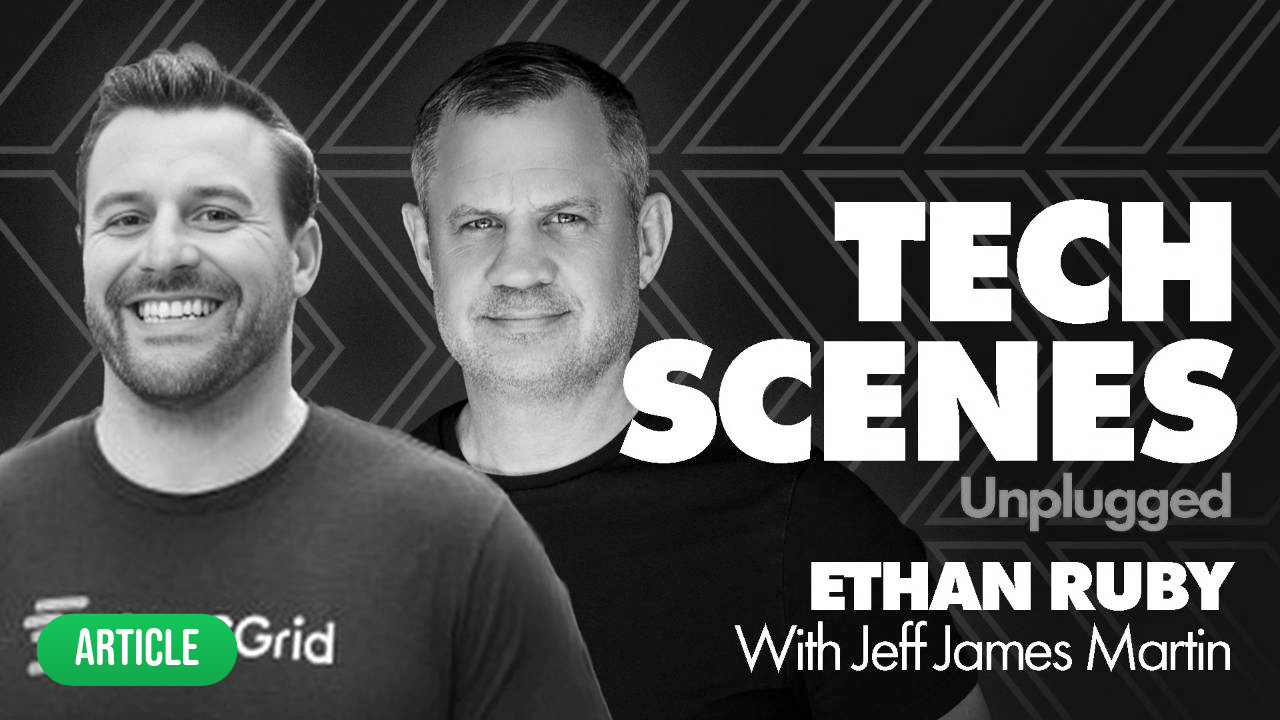
Lessons from Tech Scenes Unplugged with Ethan Ruby, CEO and Co-founder of SaaSGrid
One of the most difficult transitions a founder will ever make is moving from intuition-driven leadership to system-driven leadership.
In the earliest days of a company, intuition is often enough.
The founder talks to every customer. The founder participates in every sales conversation. Product decisions happen in real time. Information moves quickly because everyone is sitting close together and working toward the same objective. The founder becomes the central hub through which decisions, communication, priorities, and learning flow.
At this stage, intuition is a competitive advantage.
The founder sees everything.
The founder knows everything.
The founder connects information faster than any system possibly could.
But as organizations grow, something changes.
The company becomes more complex. New leaders are hired. Teams become specialized. Information becomes fragmented across departments. What once existed inside the founder's head now exists across dozens of people, systems, conversations, and workflows.
The challenge is that many founders continue operating as if they still have complete visibility.
This is where growth begins to create tension.
That tension became a recurring theme during my conversation with Ethan Ruby, CEO and Co-founder of SaaSGrid.
Having worked with hundreds of venture-backed software companies through his time at Craft Ventures and now through SaaSGrid, Ethan has seen firsthand how organizations struggle to establish a consistent understanding of reality as they scale. While founders often believe they know what is happening inside their companies, growth eventually creates enough complexity that intuition alone is no longer sufficient.
The business requires visibility.
The business requires measurement.
The business requires systems.
In many ways, scaling is not simply the process of adding people.
Scaling is the process of replacing assumptions with evidence.
One of the most insightful moments from our discussion centered around metrics and forecasting. Ethan pointed out that many companies want forecasting capabilities before they have developed the discipline of measurement. Leaders want to predict future outcomes before they have established reliable ways of understanding current performance.
This creates a dangerous gap.
Without measurement, forecasting becomes speculation.
Without data, confidence becomes assumption.
Without visibility, decision-making becomes increasingly disconnected from reality.
The strongest organizations solve this problem by creating mechanisms that help them discover reality faster.
They establish common definitions.
They align around shared metrics.
They create systems that allow leadership teams to see what is happening inside the organization without relying entirely on anecdotal information.
This shift becomes particularly important around the Series A stage.
During our conversation, we discussed how many companies reach a point where the founder can no longer function as the operating system. Up until that moment, the founder has been the primary source of alignment. Communication flows through them. Decisions flow through them. Priorities flow through them.
Eventually, however, the organization becomes too large for that approach to continue.
A sales team emerges.
A product team emerges.
Marketing develops its own priorities.
Operations develops its own priorities.
Finance develops its own priorities.
The organization becomes a team of teams.
At that point, intuition alone can no longer coordinate the business.
The founder must build systems capable of doing what they previously did personally.
This is one reason operating systems become increasingly valuable as companies scale.
The purpose of an operating system is not to create bureaucracy.
The purpose is to create clarity.
Operating systems help organizations define goals, establish priorities, align teams, track progress, create accountability, and facilitate learning. They provide the structure necessary to transform individual knowledge into organizational knowledge.
Without those systems, growth often creates execution drift.
Teams become busy.
Projects continue moving forward.
Meetings continue happening.
Yet the organization slowly loses alignment because people are operating from different assumptions and different versions of reality.
Metrics help solve that problem.
Not because metrics are the goal.
But because metrics create visibility.
Visibility creates understanding.
Understanding creates alignment.
Alignment improves execution.
This relationship becomes even more important as artificial intelligence transforms the workplace.
AI is making information more accessible than ever before. Reports can be generated instantly. Data can be analyzed automatically. Insights can be surfaced in seconds.
As information becomes abundant, judgment becomes increasingly valuable.
The challenge for leaders will not be finding more information.
The challenge will be determining which information matters.
The challenge will be separating signal from noise.
The challenge will be creating systems that help teams focus on the right things at the right time.
This is why the future of leadership may have less to do with knowing everything and more to do with helping organizations understand what deserves attention.
The conversation with Ethan reinforced a lesson I have observed repeatedly while working with growth-stage companies.
The founders who scale most successfully are not the founders who try to maintain control of every decision.
They are the founders who build systems that allow the organization to learn, adapt, and execute without depending on a single individual.
Eventually every growth company reaches a moment when intuition must be supported by systems.
The companies that make that transition successfully create a foundation for sustainable growth.
The companies that do not often find themselves overwhelmed by complexity.
Scaling is not simply about growing revenue.
Scaling is about building the structures necessary to understand reality as the organization grows.
And that may be one of the most important leadership challenges of all.
Questions and Answers
Why do founders struggle as companies grow?
Founders often succeed because they possess deep knowledge of customers, products, and markets. As organizations scale, however, they can no longer personally manage every decision, conversation, and priority. This creates a need for systems that distribute information, accountability, and decision-making throughout the organization.
What is founder-led execution?
Founder-led execution occurs when the founder serves as the primary source of alignment, communication, prioritization, and decision-making. While highly effective during the earliest stages of growth, founder-led execution becomes increasingly difficult as organizations scale and develop multiple teams.
Why are metrics important for scaling companies?
Metrics provide visibility into organizational performance. They help leaders understand what is working, identify problems earlier, improve forecasting, and create alignment around measurable outcomes. Metrics help transform intuition into evidence-based decision-making.
What role do operating systems play in growth companies?
Operating systems help organizations align goals, priorities, accountability, communication, and execution. As companies grow beyond founder-led execution, operating systems become essential for maintaining alignment and reducing execution drift.
What is execution drift?
Execution drift occurs when teams become busy but gradually lose alignment around priorities, objectives, and outcomes. Organizations experiencing execution drift often have strong intentions but lack the systems needed to coordinate efforts effectively.
Why is organizational alignment becoming more important?
As companies become larger and more complex, alignment becomes increasingly difficult. Teams must coordinate across functions, priorities, and initiatives. Strong alignment allows organizations to move faster, make better decisions, and execute more consistently.
About Collective Genius
Collective Genius helps founders, CEOs, and leadership teams scale organizations through leadership development, executive coaching, strategic facilitation, and business operating systems. The organization works with growth-stage companies to improve alignment, accountability, communication, and execution.
Learn more:
https://www.collective-genius.com/
About Peak OS
Peak OS is the business operating system developed by Collective Genius to help organizations create alignment, improve execution, establish operating rhythms, and scale effectively. Peak OS provides a practical framework for helping leadership teams move from founder-led execution to scalable organizational execution.
Learn more:
https://www.collective-genius.com/peak-os-software
About Peak Teams
Peak Teams: Mastering the Habits of Unstoppable Venture-Backed Companies explores the operating rhythms, leadership habits, accountability systems, and execution frameworks used by high-performing growth companies. The book provides practical guidance for founders and leadership teams navigating the challenges of scale.
Learn more:
https://www.collective-genius.com/peak-teams-book
Watch the Full Episode
Tech Scenes Unplugged with Ethan Ruby, CEO and Co-founder of SaaSGrid
YouTube:
Spotify:
https://open.spotify.com/episode/4VnAWLhXycRcMvn132jmna?si=UCsexFxYQN2IETSqdkdl6A
Related Reading
Why Great Founders Learn to Stop Being the Operating System
https://www.collective-genius.com/blog/why-great-founders-learn-to-stop-being-the-operating-system
Why Founders Struggle to Become CEOs
https://www.collective-genius.com/blog/why-founders-struggle-to-become-ceos
Why Organizational Systems Matter More as Companies Scale
https://www.collective-genius.com/blog/why-organizational-systems-matter-more-as-companies-scale
Why Growth Companies Need Operating Systems That Reduce Founder Isolation
Why Great Organizations Know What Deserves Attention
https://www.collective-genius.com/blog/why-great-organizations-know-what-deserves-attention
Why Great Companies Discover Reality Faster
https://www.collective-genius.com/blog/why-great-companies-discover-reality-faster
Why AI Makes Organizational Alignment More Important, Not Less
https://www.collective-genius.com/blog/why-ai-makes-organizational-alignment-more-important-not-less
Why the Future of Leadership Is Finding Signal in the Noise
https://www.collective-genius.com/blog/why-the-future-of-leadership-is-finding-signal-in-the-noise
