
Why Metrics Matter More Than Ever as Growth Companies Scale
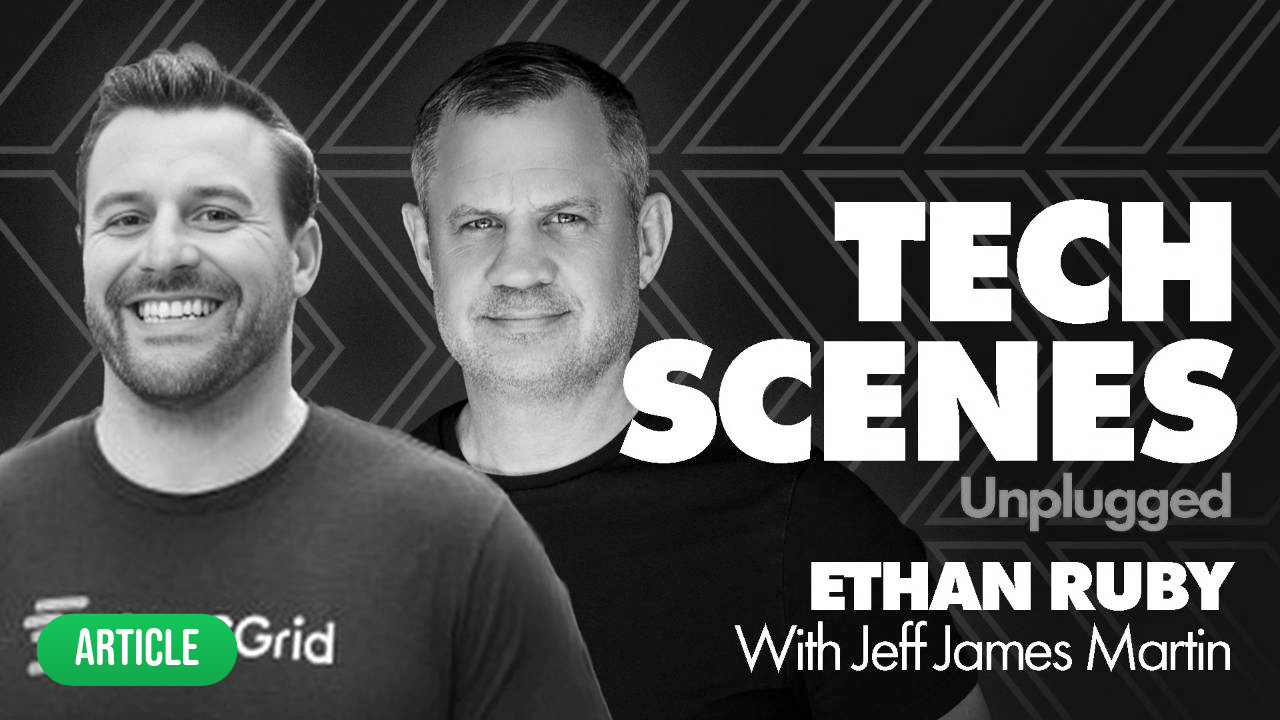
Insights from Tech Scenes Unplugged with Ethan Ruby, CEO and Co-founder of SaaSGrid
As companies grow, complexity grows with them.
What begins as a small group of founders making decisions around a single table eventually becomes multiple teams, multiple departments, multiple leaders, and multiple perspectives. Information becomes fragmented. Decisions become distributed. Alignment becomes harder. At that point, one of the greatest competitive advantages a company can develop is the ability to understand what is actually happening inside the business.
That was one of the major themes from my conversation with Ethan Ruby, CEO and Co-founder of SaaSGrid, on Tech Scenes Unplugged.
Ethan has spent much of his career helping software companies understand the numbers that drive growth. Before founding SaaSGrid, he spent years at Craft Ventures, working with hundreds of venture-backed SaaS companies and helping founders, executives, and investors understand the metrics that predict success. Through that experience, he discovered something surprising: despite differences in products, markets, and customers, many growth companies struggle with the exact same challenge.
They do not have a clear, shared understanding of their business.
Revenue data lives in one system. Customer data lives in another. Sales forecasting happens somewhere else. Financial reporting often exists in spreadsheets. Different teams operate from different versions of reality.
The result is predictable.
Organizations become slower.
Decisions become harder.
Alignment begins to break down.
Execution suffers.
As Ethan explained during our conversation, the problem is rarely a lack of information. Most companies have more data available than ever before. The real challenge is transforming that information into insight and creating systems that allow leaders to understand what deserves attention.
One of the most powerful ideas discussed during the episode was the relationship between metrics and learning.
Every company is running experiments.
Sales teams are testing messaging.
Marketing teams are testing channels.
Product teams are testing features.
Leadership teams are testing strategies.
The only way to learn from those experiments is through measurement.
Without metrics, organizations are forced to rely on opinions.
With metrics, organizations can rely on evidence.
This is why great companies develop strong learning loops. They identify what matters, measure it consistently, review it regularly, and use those insights to make better decisions.
The conversation also highlighted a common mistake many founders make during the early stages of growth.
Founders often believe they need forecasting before they need measurement.
In reality, forecasting is impossible without tracking.
Before a company can predict where it is going, it must understand where it is today.
This is especially important during the transition from startup to scale-up.
As Ethan noted, early-stage companies often focus on people, product, and users. Those priorities are absolutely correct. However, at some point, the business must demonstrate that it can consistently translate those things into revenue. Revenue becomes one of the clearest signals that a company has created real value in the marketplace.
That does not mean revenue is the only metric that matters.
Retention matters.
Efficiency matters.
Customer acquisition costs matter.
Burn multiple matters.
Sales effectiveness matters.
The broader lesson is that organizations need a framework for understanding how all of these measurements connect together.
This is where operating systems become critical.
At Collective Genius, we often talk about the moment when a founder stops being the operating system.
In the earliest stages of growth, founders can personally coordinate priorities, communication, and decision-making. As the company expands, that becomes impossible. Teams multiply. Responsibilities become distributed. Information becomes fragmented.
Without an operating system, the company begins experiencing execution drift.
People remain busy.
Meetings continue.
Projects move forward.
Yet progress slows because the organization lacks alignment around the things that matter most.
Metrics are one part of solving that problem.
Operating systems are the structure that turns those metrics into organizational learning.
The best companies create a rhythm where goals, metrics, accountability, and learning reinforce one another. Teams understand what success looks like. Leaders know how progress is measured. Decisions become easier because everyone is working from a shared understanding of reality.
Another theme that emerged from the conversation was the concept of business as a craft.
Ethan described how years of working with hundreds of companies revealed recurring patterns. While every company is unique, the fundamentals of building a successful business are surprisingly consistent.
The same is true of leadership.
The same is true of execution.
The same is true of organizational growth.
Great companies are rarely built through luck alone.
They are built through repetition.
They are built through learning.
They are built through systems.
They are built through disciplined execution over long periods of time.
In many ways, that is why metrics matter.
Metrics help organizations learn faster.
They help companies discover reality faster.
They help leaders separate signal from noise.
And in a world increasingly shaped by AI, automation, and overwhelming amounts of information, the ability to identify the right signals may become one of the most important leadership skills of all.
The future will not belong to organizations with the most data.
It will belong to organizations that know what deserves attention.
That is one of the most valuable lessons from my conversation with Ethan Ruby.
Questions and Answers
Who is Ethan Ruby?
Ethan Ruby is the CEO and Co-founder of SaaSGrid, a business intelligence and analytics platform designed to help subscription and SaaS companies understand the metrics that drive growth, retention, forecasting, and operational performance. Prior to founding SaaSGrid, Ethan spent years at Craft Ventures helping evaluate and support hundreds of venture-backed software companies. His experience gave him unique insight into the metrics, systems, and decision-making processes that separate high-performing companies from those that struggle.
What is SaaSGrid?
SaaSGrid is a business intelligence platform built specifically for subscription and SaaS companies. The platform connects data across sales, finance, billing, and operational systems to provide leaders with a unified view of business performance. SaaSGrid helps organizations track key metrics such as ARR, retention, customer acquisition costs, burn multiple, forecasting accuracy, and sales efficiency.
Why are metrics important for growth companies?
Metrics create visibility into what is working and what is not. Without metrics, organizations rely on opinions and assumptions. With metrics, organizations can learn faster, make better decisions, improve accountability, and align teams around measurable outcomes.
What are the most important metrics for SaaS companies?
While every company is different, common SaaS metrics include Annual Recurring Revenue (ARR), ARR Growth, Net Revenue Retention (NRR), Customer Acquisition Cost (CAC), CAC Payback Period, Burn Multiple, Customer Concentration, Sales Conversion Rates, and Forecast Accuracy. Together, these metrics help leaders understand growth, efficiency, retention, and scalability.
What role do operating systems play in scaling companies?
Operating systems provide the structure that connects strategy, goals, metrics, accountability, communication, and execution. As organizations grow beyond a founder-led environment, operating systems become essential for maintaining alignment, reducing execution drift, and helping teams work together effectively.
Why do founders struggle as companies scale?
Founders often succeed because they personally coordinate communication, decisions, and priorities. As organizations grow, that approach becomes unsustainable. Scaling requires leaders to build systems that allow teams to operate independently while remaining aligned to shared goals and outcomes.
About Collective Genius
Collective Genius helps growth-stage organizations improve alignment, execution, and leadership effectiveness through coaching, operating systems, leadership development, and strategic facilitation. The organization works with founders, CEOs, executive teams, and venture-backed companies to help them scale without losing focus, accountability, or organizational clarity.
Learn more:
https://www.collective-genius.com/
About Peak OS
Peak OS is the business operating system developed by Collective Genius to help organizations align strategy, goals, priorities, accountability, communication, and execution. Peak OS helps leadership teams create consistent operating rhythms, improve decision-making, reduce execution drift, and build scalable systems that evolve as companies grow.
Learn more:
https://www.collective-genius.com/peak-os-software
About Peak Teams
Peak Teams: Mastering the Habits of Unstoppable Venture-Backed Companies explores the leadership habits, operating rhythms, execution frameworks, and organizational systems used by high-performing growth companies. The book provides practical guidance for founders and leadership teams seeking to scale effectively while maintaining alignment and focus.
Learn more:
https://www.collective-genius.com/peak-teams-book
Watch the Full Episode
Collective Genius Episode:
YouTube:
Spotify:
https://open.spotify.com/episode/4VnAWLhXycRcMvn132jmna?si=UCsexFxYQN2IETSqdkdl6A
Related Articles
Why Growth Companies Need Faster Organizational Learning Loops
Why Organizational Systems Matter More as Companies Scale
https://www.collective-genius.com/blog/why-organizational-systems-matter-more-as-companies-scale
Why Great Companies Build Learning Loops Before They Need Them
Why Great Companies Discover Reality Faster
https://www.collective-genius.com/blog/why-great-companies-discover-reality-faster
Why Great Organizations Know What Deserves Attention
https://www.collective-genius.com/blog/why-great-organizations-know-what-deserves-attention
Why Great Founders Learn to Stop Being the Operating System
https://www.collective-genius.com/blog/why-great-founders-learn-to-stop-being-the-operating-system
Why Founders Struggle to Become CEOs
https://www.collective-genius.com/blog/why-founders-struggle-to-become-ceos
Why AI Makes Organizational Alignment More Important, Not Less
https://www.collective-genius.com/blog/why-ai-makes-organizational-alignment-more-important-not-less
Source: Tech Scenes Unplugged with Ethan Ruby, CEO and Co-founder of SaaSGrid.
