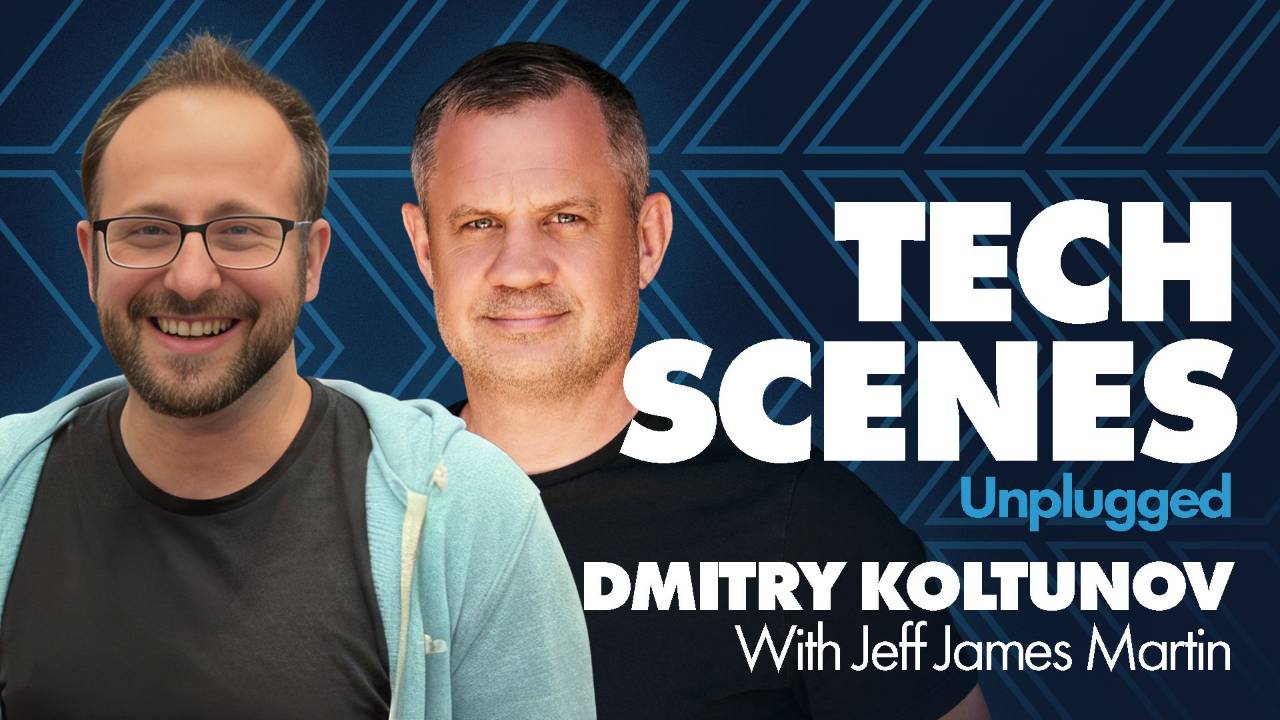
Tech Scenes Unplugged with Dmitry Koltunov CEO and Founder of Arbor
Tech Scenes Unplugged with Dmitry Koltunov, CEO and Founder of Arbor
Why Storytelling Is Becoming a Strategic Advantage in the Age of AI
In this episode of Tech Scenes Unplugged, Collective Genius Founder Jeff Martin sits down with Dmitry Koltunov, CEO and Founder of Arbor, for a fascinating conversation about AI, authentic content, storytelling, leadership communication, product development, startup learning loops, and why narrative may be one of the most valuable business skills of the next decade.
As AI continues to transform how organizations communicate, many companies face a critical challenge:
How do you scale communication without losing authenticity?
Dmitry believes the answer is not more content.
It's better storytelling.
The conversation explores how AI can amplify authentic human communication, why trust matters more than attention, how great products are built through listening, and why every successful company is ultimately telling a story.
Watch and Listen
Watch the Full Episode on YouTube
Listen on Spotify
https://open.spotify.com/episode/0JkeheC5e18Pi0rB0X97uh?si=tyyiUybNR7-dBdtuw_mqqg
Meet Arbor
Arbor is an AI-powered content platform designed to help organizations transform long-form conversations into scalable content assets.
The platform helps leaders convert interviews, podcasts, town halls, meetings, and conversations into:
-
Short-form video clips
-
Articles
-
Blogs
-
Newsletters
-
Social media content
-
Internal communications
-
Executive thought leadership
Unlike many AI content platforms focused on synthetic content generation, Arbor was built around a different philosophy:
Use AI to amplify authentic human expertise.
Rather than replacing human voices, the platform helps organizations communicate those voices more effectively and consistently.
Why Authenticity Wins
One of the most important themes throughout the episode is authenticity.
As communication channels become increasingly crowded, audiences are becoming better at recognizing manufactured messaging.
Trust is becoming the scarce resource.
Dmitry argues that businesses are fundamentally different from influencers.
Influencers monetize attention.
Businesses monetize trust.
A viral post may generate visibility.
A trusted voice generates customers.
For growth companies, authentic communication often creates more long-term value than chasing short-term engagement metrics.
Content Is Not About Attention
One of the strongest insights from the discussion is the distinction between attention and trust.
Many organizations approach content creation as a volume game.
Post more.
Publish more.
Create more.
But Dmitry argues that content should serve a different purpose.
The goal is not maximum reach.
The goal is reaching the right people.
For many companies, success comes from building credibility with a specific audience rather than attracting millions of unrelated viewers.
This shift fundamentally changes how organizations should think about content strategy.
The Future of Leadership Communication
The conversation explores how communication is evolving inside modern organizations.
Leaders are increasingly expected to communicate directly with customers, employees, investors, and stakeholders.
This trend has accelerated through platforms like LinkedIn, podcasts, webinars, and video content.
As a result, organizations need systems that help leaders communicate consistently and authentically at scale.
The challenge is no longer producing content.
The challenge is producing meaningful content.
AI can help with distribution and efficiency, but the core message still requires human insight.
Storytelling Drives Action
One of the most memorable sections of the episode focuses on storytelling.
Dmitry explains that facts alone rarely move people to action.
Stories do.
He breaks storytelling into five simple components:
-
A person
-
A setting
-
A goal
-
Stakes
-
An obstacle
According to Dmitry, every compelling story contains these elements.
The same framework applies to:
-
Product development
-
Marketing
-
Leadership communication
-
Investor pitches
-
Customer success
-
Organizational change
Stories create emotional engagement.
Emotional engagement drives action.
This idea becomes a recurring theme throughout the conversation.
Why Great Products Start with Listening
One of the strongest product-development discussions centers around customer discovery.
Dmitry shares a provocative perspective:
Steve Jobs may have unintentionally hurt product management.
While he deeply respects Jobs as one of history's greatest product minds, he argues many founders misunderstood the lesson.
Instead of listening to customers, many founders adopted a mindset of simply building what they personally believed should exist.
Dmitry argues that great B2B products are built differently.
The most successful founders spend significant time listening.
They seek to understand:
-
Customer problems
-
Obstacles
-
Friction points
-
Desired outcomes
-
What's truly at stake
The goal is not forcing customers toward a vision.
The goal is helping customers reach their goals.
Why Startups Are Learning Machines
Throughout the conversation, Jeff and Dmitry explore startup development as an ongoing learning process.
Rather than viewing startups as static businesses, they discuss them as systems designed to generate knowledge.
Founders begin with hypotheses.
They test assumptions.
They collect feedback.
They adapt.
They learn.
They repeat.
This continuous cycle of experimentation and learning creates progress.
The companies that learn fastest often gain a significant competitive advantage.
The conversation strongly reinforces the idea that growth organizations are fundamentally learning organizations.
Narrative as an Operating System
A particularly interesting theme emerges when Jeff connects storytelling to organizational alignment.
Mission.
Vision.
Goals.
Strategy.
Execution.
All of these are forms of narrative.
Organizations function best when people understand:
-
Why they exist
-
Where they are going
-
What success looks like
-
What obstacles stand in the way
-
Why the work matters
In many ways, leadership is storytelling.
The strongest leaders build narratives that align teams around a shared future.
This creates clarity, focus, and execution.
Why Founders Get Stuck
Another key insight involves the difference between "why" and "how."
Many founders become attached to a particular solution.
They fall in love with the "how."
But successful organizations stay committed to the mission while remaining flexible about execution.
The mission remains constant.
The strategy evolves.
The product evolves.
The process evolves.
The path changes.
The destination stays the same.
This distinction allows organizations to adapt without losing direction.
The Importance of Learning Loops
The discussion reinforces a core concept that appears repeatedly throughout Tech Scenes:
Learning loops.
Organizations that gather feedback quickly can adapt quickly.
Organizations that adapt quickly improve faster.
Customer conversations, product feedback, leadership discussions, and stakeholder input all create opportunities for learning.
The goal is not simply collecting information.
The goal is turning information into better decisions.
Key Quotes from the Episode
"Businesses don't get paid for content. Businesses get paid for trust."
"Storytelling moves people into action."
"Great products start by listening."
"A company is building its story while it's living it."
"People care about stakes."
"Mission stays constant. Strategy evolves."
"Organizations are learning systems."
"Authenticity scales trust."
Key Takeaways
-
Authentic communication is becoming increasingly valuable.
-
AI works best when it amplifies human expertise rather than replacing it.
-
Businesses build trust, not just attention.
-
Storytelling remains one of the most effective communication tools.
-
Great product development starts with listening.
-
Learning loops drive organizational growth.
-
Leaders must communicate more effectively than ever.
-
Mission should remain stable while strategy evolves.
-
Narrative creates organizational alignment.
-
Trust is becoming a competitive advantage.
Frequently Asked Questions
What is Arbor?
Arbor is an AI-powered content platform that helps organizations transform long-form conversations into scalable content assets while maintaining authenticity.
Why is authentic content important?
Authentic content helps organizations build trust with customers, employees, investors, and stakeholders.
How does AI help with content creation?
AI can automate content repurposing, organization, formatting, and distribution while preserving human expertise and perspective.
Why is storytelling important in business?
Stories help people understand information, connect emotionally, and take action.
What makes a strong story?
Strong stories typically include a person, a goal, a setting, meaningful stakes, and an obstacle.
Why do startups need learning loops?
Learning loops help organizations gather feedback, adapt faster, and make better decisions.
Why is listening important for product development?
Customer insights often reveal opportunities, challenges, and unmet needs that founders may otherwise overlook.
Related Insights
What Is Organizational Execution?
What Is Organizational Intelligence?
What Is a Business Operating System?
About the author
Jeff James MartinCEO and Founder, Collective Genius
Jeff James Martin is the Founder and CEO of Collective Genius, creator of Peak OS, and author of Peak Teams. He works with growth and mission-critical organizations to improve alignment, accountability, execution, and team performance. Over the past two decades, Jeff has helped hundreds of founders, executives, and leadership teams build stronger operating rhythms and scale through increasing complexity. He is also the host of Tech Scenes, where he interviews founders, investors, and operators on leadership, innovation, and organizational performance.
About Peak OS
Peak OS is the operating system for organizational execution. Designed for growth-stage and mission-critical organizations, Peak OS helps leadership teams align priorities, establish operating rhythm, improve accountability, and maintain visibility as organizational complexity increases. By creating a consistent framework for communication, planning, and execution, Peak OS helps teams reduce execution drift and turn strategy into measurable outcomes. Learn more: Collective Genius
About Collective Genius
Collective Genius helps founders, executive teams, and growing organizations improve organizational execution through leadership coaching, operating systems, strategic facilitation, and Team-of-Teams alignment. Our work focuses on helping organizations scale without losing clarity, accountability, communication, or momentum. Learn more: Collective Genius
About Peak Teams
Peak Teams: Mastering the Habits of Unstoppable Venture-Backed Companies explores the leadership habits, operating rhythms, accountability systems, and execution principles used by high-performing organizations. The book provides practical frameworks for leaders seeking to build aligned teams and execute consistently as complexity grows. Learn more: Peak Teams book
Learn More
Explore additional insights on organizational execution, operating rhythm, leadership, team alignment, business operating systems, artificial intelligence, and the future of work through the Collective Genius Insights platform. Visit: Collective Genius Insights
Music by Andrew Applepie - https://soundcloud.com/andrewapplepie
