Brian Garrett: Rebuilding the Palisades & Betting on Frontier Tech
“The tragedy helped me become as clear as I’ve ever been about what matters.” - Brian Garrett
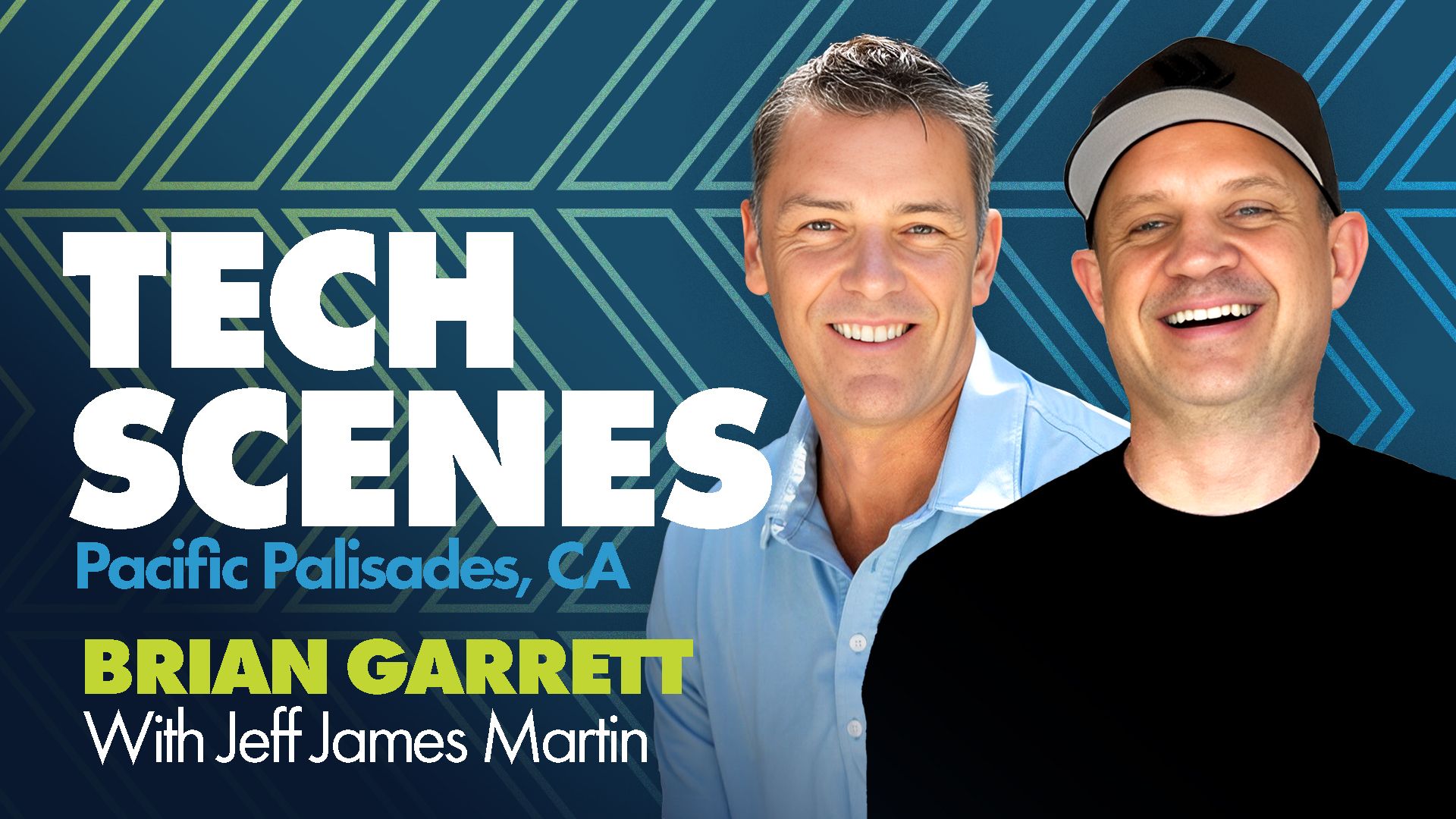
Brian Garrett is the Co-Founder and Managing Director of Crosscut, one of Los Angeles’ longest-standing early-stage venture capital firms. In this episode of Tech Scenes, Jeff Martin joins Brian for a drive through Pacific Palisades—past the neighborhood where Brian grew up, the home his family lost in the fire, and the community he is now helping rebuild.
The conversation explores two forms of rebuilding: restoring a community after devastating loss and reinventing a venture firm for the next era of innovation.
Brian shares how Crosscut evolved from its original mission of catalyzing Southern California’s technology ecosystem into a frontier-tech investment firm focused on energy and power, space and defense, advanced manufacturing, advanced materials, robotics, and resilient supply chains.
He explains why the next wave of value creation will be driven by “AI-powered, bits-enabled atoms,” why Southern California is uniquely positioned to lead it, and what distinguishes the deeply mission-driven founders building mission-critical companies.
Brian also shares the personal story of losing his family home in the Palisades fire, the realities residents face as they attempt to return, and his vision for Palisades Towne Hall—a nonprofit community gathering place designed to help residents reconnect, recover, and rebuild together.
This is a conversation about frontier technology, resilience, community, leadership, and the clarity that can emerge from unimaginable loss.
CHAPTERS
00:00 Episode preview
01:47 Touring the Palisades after the fire
02:52 How Crosscut began in 2008
04:29 Why Brian went all-in on frontier technology
06:14 From software to “AI-driven, bits-enabled atoms”
07:17 Insurance and the difficult road to rebuilding
08:49 Brian’s roots in Pacific Palisades
11:23 The vision for Palisades Towne Hall
16:04 Displacement and the loss of community services
18:24 Can frontier technology help prevent the next wildfire?
19:53 Reinventing Crosscut around frontier tech
22:30 Directed energy, autonomous warfare, and energy security
25:15 What makes frontier-tech founders different
27:19 Mission-critical companies and the risks of rebuilding
33:44 The day Brian and his family lost their home
37:05 Resilience, family, and redefining what matters
40:09 Community, clarity, and learning to ask for help
LEARN MORE ABOUT BRIAN AND CROSSCUT
Brian Garrett and the Crosscut team: https://crosscut.vc/team/
Crosscut: https://crosscut.vc/
SUPPORT PALISADES TOWNE HALL
Help create a nonprofit gathering place where Palisades residents can reconnect, share resources, and rebuild together. One hundred percent of operating profits will support local nonprofits rebuilding the 90272 community.
https://www.pledge.to/towne-hall](https://www.pledge.to/towne-hall
Related Collective Genius Insights Articles:
Related Insights
What Is Organizational Execution?
What Is Organizational Intelligence?
What Is a Business Operating System?
About the author
Jeff James MartinCEO and Founder, Collective Genius
Jeff James Martin is the Founder and CEO of Collective Genius, creator of Peak OS, and author of Peak Teams. He works with growth and mission-critical organizations to improve alignment, accountability, execution, and team performance. Over the past two decades, Jeff has helped hundreds of founders, executives, and leadership teams build stronger operating rhythms and scale through increasing complexity. He is also the host of Tech Scenes, where he interviews founders, investors, and operators on leadership, innovation, and organizational performance.
About Peak OS
Peak OS is the operating system for organizational execution. Designed for growth-stage and mission-critical organizations, Peak OS helps leadership teams align priorities, establish operating rhythm, improve accountability, and maintain visibility as organizational complexity increases. By creating a consistent framework for communication, planning, and execution, Peak OS helps teams reduce execution drift and turn strategy into measurable outcomes. Learn more: Collective Genius
About Collective Genius
Collective Genius helps founders, executive teams, and growing organizations improve organizational execution through leadership coaching, operating systems, strategic facilitation, and Team-of-Teams alignment. Our work focuses on helping organizations scale without losing clarity, accountability, communication, or momentum. Learn more: Collective Genius
About Peak Teams
Peak Teams: Mastering the Habits of Unstoppable Venture-Backed Companies explores the leadership habits, operating rhythms, accountability systems, and execution principles used by high-performing organizations. The book provides practical frameworks for leaders seeking to build aligned teams and execute consistently as complexity grows. Learn more: Peak Teams book
Learn More
Explore additional insights on organizational execution, operating rhythm, leadership, team alignment, business operating systems, artificial intelligence, and the future of work through the Collective Genius Insights platform. Visit: Collective Genius Insights
Episode Transcript
Jeff Martin in conversation with Brian Garrett of Crosscut Ventures
“I wake up now with a mission: love the people I’m around, build community, share experience, be open and authentic.” — Brian Garrett
This transcript has been lightly edited for clarity and readability. Repetition, conversational filler, driving directions, and obvious transcription errors have been cleaned up while preserving the substance and tone of the conversation. It contains occasional explicit language.
Cold Open — 00:00
Brian Garrett: We slowly packed up and drove to Santa Monica and checked into a hotel.
What we think happened is the propane tank exploded and blew out the glass doors to my kitchen. All the Ring alarms started going off, and we sort of knew we were toast then.
My wife was down looking for homes for us because there was a mad dash to get a rental property. She finally gets hold of me and says, “I think I found a home.”
I was literally looking at everything torched, and I said, “Does it have a roof?”
“Yes.”
“Good enough for me.”
I was in operator fight-or-flight mode: protect the family. Protect the family.
The software age has ended. What's happening now is more of an AI-driven, bits-enabled-atoms paradigm.
We're working on a directed-energy laser company. You couldn't have a more timely need for a technology than being able to take drones down from 600 meters with a Star Wars-like laser.
I feel very blessed to get into 2026.
I'm rebuilding my home. My kids are safe. My mom's healthy.
I wake up now with a mission: love the people I'm around, build community, share experience, be open and authentic.
I'm probably just an idiot, but that's okay.
I love this town.
Returning to the Palisades — 01:48
Jeff Martin: All right. Thanks for joining me.
Brian Garrett: Great to see you. It's been a long time.
We're driving through the Palisades now. I can show you a little bit of the devastation and how the town is laid out for people who aren't familiar with it.
The fire came up off this hill and started to burn down the street. One of the construction guys who lives below that home, along with the owner of the home I'm renting right now, basically saved this neighborhood by putting out flames.
That's the reason this little pocket we're driving through didn't burn down.
When we get back onto Sunset, you'll see Palisades High School. The fire burned through Palisades High and ripped out toward Temescal Canyon. That's where my home was lost.
The winds were around 100 miles per hour, and the embers were jumping 30 or 40 feet at a time.
Everyone talks about the lack of water—all true—but I'm not sure anything could have stopped this.
It was a once-in-a-lifetime combination of wind speed plus the city not putting out the original fire on January 1.
It caused billions of dollars in damage.
The Origins of Crosscut Ventures — 02:55
Jeff Martin: Let's start from the top.
One, thanks for being here.
Two, tell me about Crosscut.
Brian Garrett: Crosscut's origins go back to 2008, before the global financial crisis.
Rick Smith, who I had worked with at Palomar for four or five years, and my next-door neighbor on this bluff, Brett Brewer—the original president of Intermix Media, which owned MySpace—and I could see the flywheel of innovation happening.
I believe we were the first guys to really put a stake in the ground and say, “Let's start a fund focused on catalyzing innovation in the Southern California tech ecosystem.”
That was 2008.
It was a great idea.
I put 50 on the cover, got my wife pregnant with our third kid—who just graduated high school on Saturday—and bought a house in the Palisades.
Jeff Martin: Doesn't it always happen? Everything all at once.
Brian Garrett: Yeah. Great plan.
We raised $5 million before the Lehman implosion and never raised another penny for that first fund.
It put us in a really tough financial spot.
I was consulting, then took a full-time operating role. I did a public-company turnaround and built a startup from scratch through Funds One and Two.
Then around 2014 or 2015, we had done about 35 deals and had four or five exits.
Institutional money started paying attention to Southern California.
We raised our first institutional fund, all went full-time as VCs, and never really looked back.
We did five funds under the generalist umbrella of catalyzing Los Angeles.
Then I started doing space and defense on behalf of the fund in 2018.
Jeff Martin: So you started space earlier.
Brian Garrett: I started space and went down that rabbit hole.
I wasn't coming back.
There were no other categories of technology I was interested in.
My job is to chase the talent.
You could see the SpaceX, Anduril, Tesla, and Hyperloop diaspora happening.
I wrote our first check into a Santa Barbara company called Umbra. That company is now very profitable and has really won the category in synthetic-aperture radar while expanding into other space-related areas and satellite design.
As we got to Fund Six, Rick decided it was time to step aside and move into senior-advisor status.
We had been talking about this frontier thesis and how it represented the best opportunity I'd seen in all my years investing in Southern California.
So I've gone all-in around what we call advanced manufacturing, advanced materials, energy and power, space, and defense.
All of those categories play off one another, along with the talent rising out of the successes of Southern California.
The Software Age and the Rise of the Physical World — 06:13
Jeff Martin: Tell me more about that.
Brian Garrett: Our big thesis is that the software age—the paradigm of the information age—has ended.
There was a tremendous amount of value creation there.
But what's happening now is more of an AI-driven, bits-enabled-atoms paradigm.
It's much more mechanically centered, hardware centered—designers tackling big problems that we define as the next frontier.
We think it's a major paradigm shift.
We think it's where a huge amount of value creation in venture is going to happen.
And we happen to believe it's very much a Southern California paradigm.
You're taking advantage of the old aerospace and defense ecosystem in Los Angeles, along with some of the larger problems that have been tackled by SpaceX.
You're seeing the redefinition of supply chains and new advanced-manufacturing frameworks that allow you to do things better, faster, and cheaper.
That allows new companies to leapfrog through innovation and tackle incumbent markets that haven't meaningfully innovated in a long time.
That's really where we're spending our time.
Rebuilding After the Palisades Fire — 07:00
Brian Garrett: This is the Palisades Bluff.
About 95% of the homes burned in this little neighborhood.
We're making progress, but it's slow.
I'm seeing more framing than I saw two months ago, but a lot of people still aren't ready to submit plans because they haven't settled with their insurance companies.
They don't know what they can afford.
The press is obviously talking about the slow permitting process and Mayor Bass, and that's true.
But a huge part of the problem is insurance companies dragging their heels and not wanting to pay out.
If you're trying to rebuild but you don't know what you can afford per square foot—and you're not getting paid out at the current cost of construction—it's really hard to know what plans you can submit.
Jeff Martin: How do the insurance companies hold out?
Brian Garrett: They argue with you and fight you on every detail.
You can say, “My rebuild costs are this.”
They'll say, “No, we think you can do it for this.”
You say, “Show me one contractor who's going to build it for $500 a square foot. There's no such thing.”
And they'll say, “Well, that's what we think it's worth.”
But it's going to cost $1,000 a square foot.
So you say, “Pay me out to the maximum of my policy.”
They just drag it out as long as they can.
Brian's Home and His History With the Palisades — 09:00
Jeff Martin: You grew up in this area?
Brian Garrett: I did.
Up in the Marquez Knolls, near where the fire began.
I was born and raised here in 1973.
Jeff Martin: You've got a year on me.
Brian Garrett: It's kind of a fascinating story.
This was a very middle-class suburban development town originally built around the Presbyterians who used to come into Temescal and create a retreat center.
And that's my house right there—the framing we're looking at.
That home was my family's dream home.
We bought the lot. We went through Coastal Commission approvals. We spent five years building it through the pandemic.
We lived next door in 1,200 square feet with three kids homeschooling, surviving caisson drilling and all sorts of things.
Eventually we built this beautiful home and lived in it for about a year and a half before the fires.
The reason we're making good progress rebuilding is that we submitted essentially the same plans and are rebuilding the same house.
My wife is a total badass and is moving things along.
We could probably be done in six or eight months if we wanted to.
But I joke that we'd be resettling the Palisades Bluff because we might be the only people out here.
Feeling Abandoned—and Choosing to Build — 10:27
Brian Garrett: They're supposed to be burying electrical lines here too.
But immediately after the fire, they came back in and put the lines back up the way they were.
I feel like the city has forgotten us, truthfully.
Los Angeles has a lot of problems, and we're one little suburb that suffered tremendously.
But we have almost no public services.
No street sweeping. No cleaning.
We've done community meetups ourselves to clean the streets and pick up garbage.
We're being left and abandoned at the moment.
It's frustrating because we're a huge part of L.A.'s tax base, but we're not getting the services we feel we deserve.
There are a lot of angry residents.
I've never been terribly political, but I do feel like we've been left for dead by Gavin Newsom and Mayor Bass.
My way to lean in is to try to help bring my community back.
I was born and raised here.
I've lived in seven homes total in the Palisades.
All seven burned in that fire.
I'm a diehard Palisadian. I've spent 43 of my 53 years on this planet here.
This Town Hall idea is my way to bring people together.
Great ideas happen when you have community.
If you can support the community and create a nonprofit model that's self-sustaining—with all the proceeds going back into rebuilding initiatives—that's one way for us to circumvent being completely dependent on city services and government.
The Vision for Palisades Town Hall — 12:08
Jeff Martin: Tell me more about what this is going to look like.
Paint a picture of what you see a year or two years from now.
Brian Garrett: If I can get this thing off the ground, think of it as an outdoor cargo-container village.
Every afternoon, some event would be led by a community group.
Maybe it's a church group.
Maybe it's the Palisades Youth Baseball League.
Whatever it is, they're all welcome at Town Hall.
Then you provide services around it—merchants selling coffee, pizza, premade sandwiches, beer, wine.
It becomes an epicenter and energy center for the town.
We use that energy to meet, convene, heal, and rebuild together.
When you do that, you feel a sense of connection and camaraderie.
And the way I've built the business model, as profits from things like beer and wine get generated, I can turn around and donate them to the best nonprofit initiatives helping the town.
I'm taking it live through a crowdfunding campaign with tax-deductible capabilities through another friend and Palisades resident, Jeep Sintron, and his pledge platform.
We've got some big events coming up.
There's a car show this weekend, and then our traditional Fourth of July parade.
Those are big moments to let everyone know I'm doing this, that I need their support, and that I want everybody behind it.
A Community Without a Center — 13:42
Jeff Martin: Is there any other convening place right now for the community?
Brian Garrett: There really isn't.
Caruso protected his assets with his private fire department, and he's supposed to reopen the Caruso Village, which is great.
But I've always thought Caruso missed the mark a little bit.
It's a very high-end destination. It's a Yves Saint Laurent shopping experience.
My father came through the foster-care system in East L.A.
He was a self-made guy who paid his way through UCLA by selling Max Factor cosmetics door to door.
The middle-class roots of the Palisades don't necessarily want Yves Saint Laurent.
They want an $8 pastrami sandwich.
This park we're driving past is the heart of our town.
We run all our youth sports through here.
My friends Charlie and Jenna Jackson, alongside J.J. Redick, the Lakers, Caruso, and a bunch of other people have raised more than $40 million in a public-private partnership with the city to rebuild this entire destination.
They're recreating it with incredible designs and have done an amazing job raising the money and starting the reconstruction project.
That's going to be great for the community.
We also suffered another tragedy last year.
Our close family friends Jen and Dan Levy lost their son Braun in a DUI accident.
He was an amazing tennis player who was going to walk on at the University of Virginia.
The Live Like Braun Foundation is involved in bringing some of the tennis courts back in Braun's honor.
A lot of the most beautiful aspects of the Palisades are coming through these rebuilding efforts.
It's slow and difficult.
But we're committed because we love this town.
Where the Community Went — 16:07
Jeff Martin: A lot of people had to go somewhere else.
Where did people go?
Brian Garrett: A lot of people got out of California for a while.
A lot of people had to scramble to find new schools because most of the schools burned.
In my close community, I had two boys still in high school—one was a senior and one was a junior.
One was at Brentwood. One was at Loyola.
My other son, Oliver, was already away at college.
We basically made a beeline, along with 30 or 40 other families, toward the South Bay—Manhattan Beach and Hermosa.
We were trying to find another beach community that felt as casual and close-knit as this, somewhere everybody could go and, as we said, drink our sorrows away and lean on one another while we figured out our lives.
I spent about a year on Hermosa Beach, from January through December, and then moved back with my wife and youngest son, who just graduated on Saturday.
There are still very few commercial services here.
We lost Gelson's. We lost Vons. Erewhon shut down.
They're coming back, but it's going to take years because the buildings are gone.
That's another reason I came up with Town Hall.
We need things.
Could Technology Protect the Palisades? — 18:27
Jeff Martin: What about sprinkler technology or some kind of home-defense technology?
Bringing your two worlds together, is there fire technology you're looking at?
Brian Garrett: I've been looking at some fire-related technologies.
The one I've been most intrigued with is basically a medium-sized drone—maybe the size of this car—with fire-retardant capabilities.
It could autonomously respond using signals from low-Earth-orbit systems that can identify a fire.
The idea is that if you can see a fire and get to it within five minutes, you can usually contain it.
But when something happens up in the Santa Monica Mountains, there's nothing that can get there in five minutes.
No disrespect to Station 69.
There's just no response time possible that could stop these things once the winds are blowing.
But if you had autonomous drones spread across the Santa Monica Mountains, you could create a protected layer around our town.
That's one of the ideas where I could potentially take profits from Town Hall and buy something like that on behalf of the town.
I have lots of ideas.
My wife's idea is to secede from Los Angeles.
That's going to take a lot of profits from beer and wine.
But she's determined to have me produce enough profit so we can get out of L.A. City.
We're just too beholden to a broader city's goals and priorities.
Reinventing Crosscut Around the Frontier — 19:53
Jeff Martin: All right, let's talk about the new fund.
Brian Garrett: As I went deeper into this thesis, Rick, Brett, and I had already put a good amount of money behind the frontier thesis out of Fund Five.
It became clear it was time to reposition Crosscut's brand within the Southern California tech ecosystem.
One thing I don't think we did a good job of historically was marketing ourselves.
We tried to let our reputation among founders spread organically: do the job, get on the cap tables.
But people were still calling us “the e-commerce guys” because of what we did with ShoeDazzle back in 2009.
I hadn't done an e-commerce deal in eight years.
So it became important to put effort behind communicating what we stood for.
Instead of trying to be everything to everybody, we wanted to put a stake in the ground around the El Segundo, Hawthorne, and Torrance ecosystem and around what we believe are these emerging frontier landscapes.
Otherwise, we're just another fund in a well-funded ecosystem.
When we started, we were the only guys in town.
We were here before Upfront. We were here before Greycroft.
As the market matured, more capital arrived and more sector-focused funds appeared.
I view my job almost like being a product manager.
How do I put a product into the market that entrepreneurs want, but that LPs are also going to be excited about?
To think you can release version 1.0 back in 2008 and then just sit on your butt is arrogant and misguided.
The whole lens around this was: How do we reinvent ourselves and really put a stake in the ground around this emerging ecosystem?
There are certainly plenty of funds chasing frontier.
I think we have a unique approach.
We've gone after the energy and power stack a little more uniquely than most.
There are a lot of people chasing Golden Dome and defense.
I'm less interested in interceptor models or traditional drone technologies.
I'm more interested in what we consider the actual frontier of space and defense—the next thing that's coming.
That's where we're spending our time.
I hired a principal who came out of ADL, Relativity, and Raytheon, and he and I are working together on space and defense.
Geopolitics, Directed Energy, and a 20-Year Thesis — 22:13
Jeff Martin: I think it's such an interesting time because so many things are coming together right now.
Geopolitics. Defense. The technology itself and the capabilities it now has.
I've always been waiting for this time.
I'm excited about the potential of what's actually coming.
Brian Garrett: I agree.
You couldn't have better tailwinds from what's happening geopolitically.
I'll give you an example.
We're working on a directed-energy laser company.
We were working on it before the Iran war broke out.
But you couldn't have a more timely need for a technology than being able to take drones down from 600 meters with a Star Wars-like laser.
Iran was sending drones across the Middle East, attacking commercial buildings and airports.
You can imagine a dual-use solution that, if it's at the right price point and the right cost per shot, could be very effective in this next phase of warfare, which is mostly unmanned and autonomous.
People sometimes ask about our thesis and whether it's a Trump-related or partisan dynamic.
I tell them: our first bet was around advanced nuclear fission.
That train has left the station.
It's a bipartisan topic within the government.
Certainly, Trump's approach to fast-tracking it may be different from a Democratic administration.
But the idea that we need more electricity in the United States is understood across political parties.
If you look at our broader frontier-tech thesis, we need to reinvigorate American manufacturing, reshore our supply chain, reduce our dependence on China, get to energy independence, win the race in AI, and win the race in space.
Those are five key agenda topics for any American administration.
And it's a 15- to 20-year game plan.
You can see the budgets coming for the Department of Energy and the Department of War.
You can see the Office of Strategic Capital recognizing that we don't have sufficient critical-minerals infrastructure.
You can look across all these areas and say there's no doubt this momentum will continue.
How it gets approved, brought to market and, most importantly, commercialized is the hard part.
Small, Modular, Mass-Manufacturable Energy — 24:00
Brian Garrett: Our thesis that's slightly different is that everything we're doing around the energy and power stack is small, modular, and mass manufacturable.
We believe in a Tesla Gigafactory-style approach to manufacturing versus large-scale buildouts of multi-gigawatt nuclear reactors like Vogtle in Georgia.
We think you need to reach economies of scale and cross the valley of death in commercialization by learning how to mass manufacture these technologies with really clear long-term unit economics.
That's been driving our investment behavior across four or five deals we've done in the new fund, which we call Crosscut Frontier One.
It's also driving some of the co-investments and later-stage deals we're working on, including companies like Radiant, Aalo Atomics, Valar Atomics, and Arbor Energy here in Los Angeles.
What's Different About Frontier-Tech Founders? — 25:16
Jeff Martin: When you're investing and looking at these founders, what's different now?
What are you looking for in frontier-tech founders that may be different from what you looked for during the mobile, web, and e-commerce eras?
Brian Garrett: I would say they're more mission-driven than any founders I've ever seen.
They have a fresher and more unique perspective on a market and on how you penetrate or build something that can disrupt that market.
That's Elon's thinking, and it has permeated a massive organization that's becoming one of the most important companies in the world.
I've always joked that if you're at SpaceX, you don't come out and decide you want to build a Kim Kardashian shoe-of-the-month club.
You want to tackle some of humanity's biggest problems.
The obvious categories are manufacturing, energy, space, and defense.
The pool of talent going after these problems is much more mission-oriented and thinking on a much larger scale.
It's risky, because these are hard things to do.
But you're going to end up building businesses of scale—more meaningful businesses of scale.
Their frameworks are often built around clean-sheet, first-principles design paradigms.
Don't be burdened by the history of an industry.
There are nothing but green lights to Malibu.
That's the energy and culture I see.
They're building these companies at hyperscale.
It's awesome to watch.
Jeff Martin: With the companies I'm working with, I think you've totally nailed the mission piece.
They're not only mission-oriented.
They're mission-critical.
It's different when you're sending something to space and something simply can't go wrong versus iterating and pivoting products in the commercial marketplace.
They operate differently.
I think there's a real difference in the founder-operator.
The Insurance Question — 28:10
Jeff Martin: You talked a little about insurance earlier.
What does insurance look like for people coming back?
Brian Garrett: It's hard to get coverage.
That's one of the biggest risks.
We don't really know what our policies are going to look like.
They could be 10 or 20 times more expensive than they were before.
That's where we need to fix the regulatory bodies governing insurance.
It wasn't an open market. It wasn't priced fairly.
It was being regulated by the insurance commissioner, and State Farm was pulling out for a reason.
Obviously, climate-related disasters are happening more and more.
We need new business models that allow companies to appropriately understand and underwrite that risk.
That's another thing that needs to get fixed here.
Jeff Martin: Is that holding people back?
Brian Garrett: Absolutely.
People are scared.
Why build a house if you can't get it insured?
My wife and I are probably some of the crazy ones.
We just don't care.
We're going to live here.
What's the chance another disaster like this happens in our lifetime?
I laugh when I say that because her mom lived in Paradise, lost her home in the Paradise Fire, moved here, and then was displaced from another fire.
So it did happen to her twice.
I'm probably just an idiot, but that's okay.
I love this town.
My boys and I all went and got “90272” tattoos underneath our arms.
I had never wanted a tattoo.
But I realized this was the one thing I would never be sad about putting permanently on my body.
My best friend Craig and my boys have all gotten 90272 tattoos.
I'll admit mine is a lot smaller than my boys'.
I was baby-stepping my way into the tattoo world.
The Hidden Cost for Homes That Survived — 29:52
Jeff Martin: Some of these homes survived.
Were those families still displaced?
Brian Garrett: Yes.
Smoke damage meant that almost everything inside had to be ripped out.
I've said numerous times that some people whose homes didn't burn may actually be worse off than those whose homes were a total loss.
The insurance coverage for remediation versus total loss can be much worse.
You end up fighting a lot more to get the money.
They'll say, “Your house is clean.”
You say, “No. I just tested it. It's full of carcinogens.”
They say, “Move back in. You're done with your alternative-living-expense budget.”
And the family says, “No, I just had it tested again. I could get cancer if I move back in there.”
It's been brutal.
A lot of people are coming back right now because their alternative-living budgets are gone, and they're being forced to move back into semi-remediated homes.
Some aren't comfortable with it at all.
Then you have elderly families who don't have the time or money to rebuild.
You have young kids who moved into new schools, got comfortable there, and don't want to move again.
And you have people who simply can't afford to rebuild because they didn't have enough coverage.
A lot of people were on the FAIR Plan, which creates its own limitations.
A Generation Hit by Two Once-in-a-Lifetime Events — 31:09
Jeff Martin: Your kids were toward the tail end of high school.
Brian Garrett: Yeah.
And they weren't going to high school here in town, so they weren't displaced from school.
I feel very lucky compared with friends who had younger children in the elementary schools.
The elementary schools were destroyed.
The private elementary and middle schools here were damaged.
Everybody had to find somewhere new.
Many of the schools ended up operating out of office parks.
Palisades High took over the old Sears building in Santa Monica.
It's been really tough on these kids.
So many of them faced the pandemic and then this disaster.
My kids had to face both of these once-in-a-lifetime experiences.
It certainly developed resilience in them, but it wasn't an easy childhood.
2025 was a tough year to swallow for a lot of people in the Palisades.
Rebuilding Homes for the Next Fire — 32:57
Jeff Martin: Is there new technology they're using on these homes?
Cement board? Hardie board? Things like that?
Brian Garrett: There's fire-retardant-treated lumber.
You'll see some metal-framing homes.
But my home was already built as fire-resistant as we could reasonably make it.
Stucco. Tile. Composite decking.
Jeff Martin: It's the eaves too, right?
Fire gets underneath the eaves.
Brian Garrett: That's true with older homes, but my home didn't have eaves or obvious access points.
Honestly, what we think happened at our home was related to an outdoor propane heating lamp.
There had been a high-wind advisory.
That morning was my first day back in the office for 2025.
I went outside and laid our propane heating lamps down because of the wind.
But I left one near the glass sliding doors.
The Day Brian Lost His Home — 33:32
Brian Garrett: The fire started around 10:30.
We sat on our rooftop and watched it come over the hill near where you picked me up.
We watched for about three or three and a half hours.
Then finally the winds shifted and it started coming our direction.
I said, “Okay guys, we should probably get out of here.”
I had my mom, my mother-in-law, all three boys home from school, my wife, three dogs.
We slowly packed up.
It was six cars, three dogs, two grandmas, three kids.
We drove to Santa Monica and checked into a hotel.
The winds were howling.
We were watching the fire on our cameras as it got dark.
What we think happened is that the propane tank exploded.
It blew out the glass doors to my kitchen.
Then all the Ring alarms started going off.
That's when we basically knew we were toast.
We ended up spending the night down in the South Bay.
The next morning, I drove back with my son.
We e-biked back into the area to find out whether the house had burned.
The entire bluff was still burning.
We found a pathway up a roughly 100-foot ridge.
When we came over, my heart skipped a beat for a second because the garage was still standing.
I thought maybe my house had made it.
One of my cars was still sitting there on the street and wasn't even touched.
But everything below the garage was gone.
My son and I loaded the bikes into the truck, grabbed some things from the garage, and drove back out while the town was still burning.
There's one story from that day that's funny now, even though none of it was funny at the time.
My wife was down in the South Bay looking for a rental because there was a mad dash for housing.
I didn't have cell coverage.
Eventually she gets hold of me while I'm standing about 40 feet from ripping flames on another bluff.
She says, “I think I found a home.”
She wanted my approval.
I'm literally staring at everything torched.
I say, “Does it have a roof?”
She says, “Yes.”
I say, “It's good enough for me.”
I'm inhaling smoke and standing in the middle of all this destruction.
She locked the lease that day.
We had a house within about 16 hours of the fire.
I was in a panic.
I needed a home for my family.
I needed somewhere we could feel safe.
The shock hadn't really hit me yet.
I was just in operator mode.
Fight or flight.
Protect the family.
Protect the family.
That was it.
What Loss Actually Means — 36:38
Jeff Martin: The first time we were evacuated, we didn't lose our house.
But I grew up in the Midwest.
You learn how to get out of your house when your house is on fire.
You don't learn how to get out of the city when the city is on fire.
I was completely unprepared.
We were just throwing stuff in the Suburban, trying to get the whole family and the cats in the car.
Then I realized we barely had any gas.
I can't imagine what you went through.
How did the kids handle it?
Brian Garrett: You never know with teenage boys, right?
They bury things inside.
Losing our home was hard.
But we lost our home as part of a community.
There was a shared loss in that experience.
The loss of Braun was probably much harder for my local community, my friends, and obviously Jen and Dan.
That was their son.
That felt so acute and so singular to them and their suffering.
This kid was the light of the community.
He was the kid who connected everybody.
That happened four months later.
It was probably harder for my kids than losing the house because the house is just stuff.
I think we got to that place pretty quickly.
It's just stuff.
We got the most important things out.
I got the memories out.
But to lose Braun and see such a light lose his life so suddenly felt so tragic and wrong.
That was much harder for my kids.
It's something we've had to continue checking in with them about.
The Year That Kept Coming — 38:14
Brian Garrett: And then the year just continued.
I had a close friend diagnosed six months later with terminal melanoma that had spread through his spine.
Then, to finish off 2025, my mom was diagnosed with stage-four lung cancer.
I fought from October to get her through the holidays—feeding tube, immunotherapy.
The good news is that she's made it to the other side.
The mass is gone.
She's back in her coastal-living home and doing great.
But that was my 2025 in a nutshell.
So I feel very blessed to get into 2026.
I get to do what I do in venture.
I get to chase this frontier-tech thesis.
We have this amazing portfolio being built around energy, power, space, and defense.
And I share all of this openly because people say, “I feel so bad for you.”
And I say, “Please don't.”
I'm good.
I'm better off than most.
I think about Altadena and those families and how much harder it may be for that town to come back than an affluent community like the Palisades.
I'm rebuilding my home.
My kids are safe.
My mom's healthy.
I've got the things that matter to me in my life.
I'll be fine.
Clarity Through Tragedy — 39:14
Brian Garrett: I wake up now with a mission.
My mission is to love the people I'm around, build community, share experience, be open and authentic.
I bring that into my venture world the same way I always have.
I've always been a community-first leader.
I do that in the firm I lead and in how I work with our younger talent.
It's really the only thing that matters to me now, looking at the next 10 or 15 years of my business career.
It's a great lesson to get.
It sucks that I've had to go through these tragedies.
But being this clear about what matters to me is one of the greatest gifts you can receive.
Jeff Martin: I was going to say the same thing, but you said it so well.
It grounded you.
Unfortunately, it came out of tragedy.
Brian Garrett: I'm as clear as I've ever been.
We get drawn in different directions.
We get ADD.
We chase different things.
I know what I get up for every single day.
My wife.
My kids.
My family.
I'm lucky to do work that I love.
I get to give back through things like Town Hall.
And I get to continue building community.
That's the one thing that has helped me feel less alone in this journey: feeling connected to others.
Whether it's the Los Angeles tech community, my town here, or the companies I get to be part of.
That's how this journey becomes more tolerable.
Jeff Martin: That makes sense.
I want to end it right there.
That was perfect.
After the Conversation: Asking the Community for Help — 41:00
Jeff Martin: I'd love to help in any capacity.
I have friends who are incredible collaborators and connectors. I know people who would want to give back and help you guys.
Brian Garrett: Thank you.
What I do need help with is promoting this crowdfunding effort.
I've never done that before.
I don't really know how to ask.
I'm also not good at asking for help.
So I need to learn to ask for help.
I can't be a lone wolf like I have most of my life.
I'm leaning into the community, but I also have to ask the community to help me.
Awareness for the campaign is the biggest thing.
I'm about to go live with it.
Then I need to activate my networks and see if they'll lean in.
I'm running hard into the Fourth of July weekend.
I'm speaking at this car show, and I get to announce the coming of Town Hall.
Jeff Martin: I think the way you're doing it means it will come naturally.
People are going to connect to the mission because it's a mission they already feel connected to.
I think you're going to see it blossom.
Brian Garrett: I hope so.
I decided to turn it into a nonprofit because I realized that if it's truly a community endeavor, then everybody feels shared ownership of the space.
It will have 10 times the success.
I'd rather have 10 times the success for everybody than one-tenth the success for me.
That's just how I'm wired.
I came from team sports.
I'm oriented around the idea that there is no “I” in team.
How does the team of the Palisades have the most success solving our problems together?
That's the idea behind Town Hall.
Jeff Martin: I love it.
I'll make some connections.
Brian Garrett: Awesome.
