
Why Great Companies Build Operating Systems Before They Build Scale
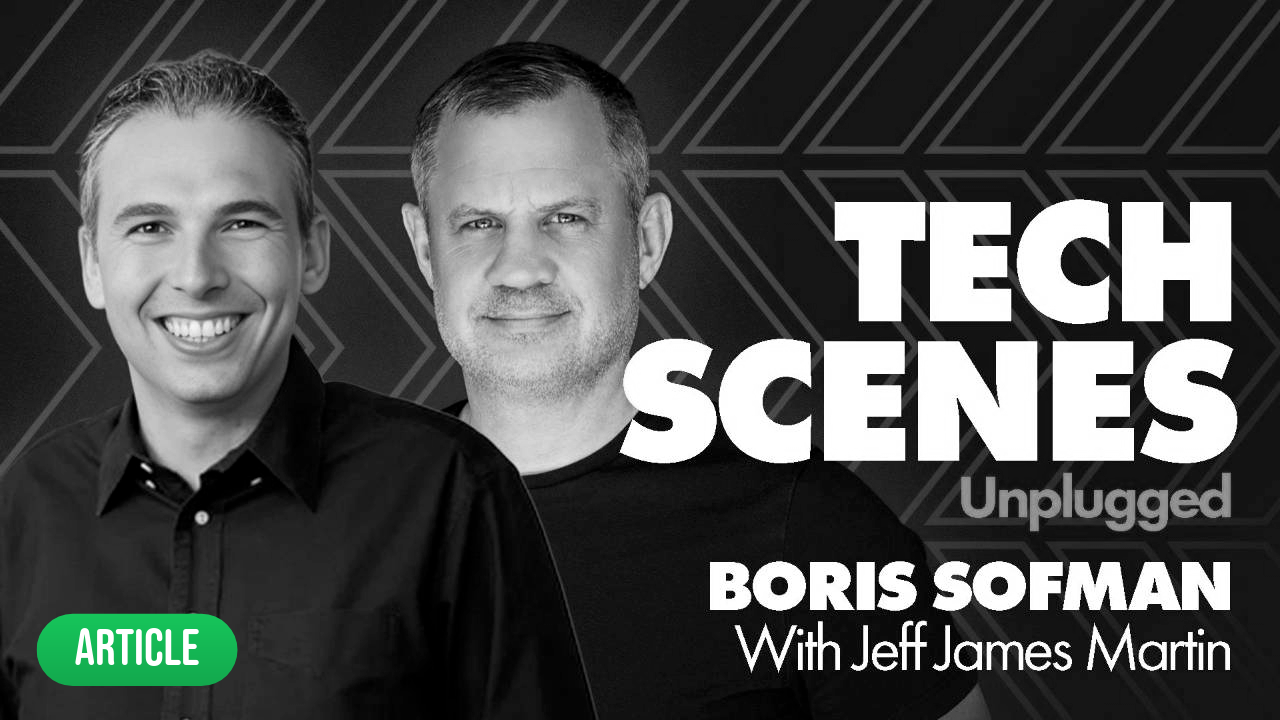
Insights from Tech Scenes Unplugged with Boris Sofman, Co-Founder and CEO of Bedrock Robotics
Many leaders assume scaling a company is primarily about adding more people, more customers, more products, or more capital.
In reality, scale often exposes a different challenge.
Complexity.
As organizations grow, complexity expands faster than almost anything else. Communication becomes harder. Decisions become more distributed. Teams become more specialized. Dependencies multiply. What once felt simple begins requiring coordination across dozens, hundreds, or even thousands of moving parts.
The companies that successfully navigate this transition often discover that growth is not primarily a people problem.
It is an operating system problem.
During my conversation with Boris Sofman, Co-Founder and CEO of Bedrock Robotics, we explored the future of artificial intelligence, robotics, machine learning, autonomous systems, and construction technology. While the conversation covered a wide range of topics, one idea stood out.
The future belongs to systems that can coordinate complexity.
Bedrock Robotics is building autonomous heavy equipment for construction sites, beginning with excavators. At first glance, the opportunity appears to be about replacing operators with automation. However, as Boris described the long-term vision, something much larger emerged.
The real opportunity is not simply creating autonomous machines.
The real opportunity is creating an operating system that coordinates work.
Today, construction projects involve enormous amounts of coordination. Contractors manage equipment, labor, schedules, materials, timelines, dependencies, budgets, safety requirements, and constantly changing site conditions. Every delay creates ripple effects. Every inefficiency compounds across the project.
When viewed from that perspective, autonomous machinery becomes only one piece of a much larger puzzle.
The real transformation occurs when individual machines become part of a coordinated system.
Boris described a future where fleets of autonomous excavators, loaders, graders, bulldozers, and other equipment work together as part of a unified operating environment. Instead of managing individual machines, leaders define outcomes. The system helps optimize resources, coordinate schedules, predict delays, improve utilization, and continuously adapt to changing conditions.
What struck me is how similar this challenge is to what growing organizations face every day.
Most companies begin with people coordinating work directly.
The founder knows everything.
Communication happens naturally.
Decisions happen quickly.
Alignment occurs through proximity.
As companies grow, those conditions disappear.
Information becomes fragmented.
Teams become specialized.
Leaders lose visibility.
Decision-making slows.
Execution drift emerges.
The solution is rarely adding more meetings.
The solution is creating better operating systems.
An operating system is not simply software.
It is the collection of structures, communication rhythms, decision-making frameworks, priorities, accountability systems, and processes that allow organizations to coordinate complexity effectively.
Without an operating system, growth eventually creates friction.
With an operating system, growth becomes manageable.
This is why some organizations seem capable of scaling repeatedly while others struggle to maintain alignment.
The difference is often not intelligence.
It is infrastructure.
The strongest organizations create systems that help people make good decisions without requiring constant oversight from leadership.
They establish clear priorities.
They create visibility.
They improve accountability.
They reduce ambiguity.
They help teams focus on outcomes rather than activity.
One of the most interesting parallels Boris discussed involved machine learning itself.
Traditional software development often relies on clearly defined rules and predictable workflows. Machine learning introduces a different reality. Systems become increasingly adaptive. Teams learn continuously. Models improve through feedback loops. Progress depends on iteration rather than static planning.
Organizations increasingly face the same challenge.
Markets change faster.
Technology evolves faster.
Customer expectations shift faster.
The companies that succeed are often the companies that build learning systems rather than static systems.
They create mechanisms for collecting information.
They create mechanisms for sharing information.
They create mechanisms for adapting based on information.
In other words, they create organizational operating systems.
This idea becomes even more important in the AI era.
Artificial intelligence can accelerate productivity.
It can automate tasks.
It can improve efficiency.
It can provide insights.
But AI alone does not create alignment.
AI alone does not create priorities.
AI alone does not create accountability.
Those remain leadership responsibilities.
The organizations that gain the most value from AI will likely be the organizations with the strongest operating systems.
They will know what matters.
They will know how decisions get made.
They will know how teams coordinate.
They will know how information flows.
Technology amplifies what already exists.
Strong systems become stronger.
Weak systems become more exposed.
One of the most compelling aspects of Bedrock's vision is that it recognizes this reality. The long-term opportunity is not simply automation. It is orchestration. It is creating systems that coordinate increasingly complex environments while allowing people to focus on higher-value decisions.
That lesson extends far beyond construction.
It applies to startups.
It applies to growth companies.
It applies to leadership teams.
It applies to every organization attempting to scale.
Growth creates complexity.
Complexity requires coordination.
Coordination requires systems.
The companies that thrive over the next decade will not simply be the companies with the best technology.
They will be the companies with the best operating systems.
That may be one of the most important lessons from my conversation with Boris Sofman.
Great companies do not scale because they add more resources.
Great companies scale because they build systems capable of coordinating complexity.
Questions and Answers
Who is Boris Sofman?
Boris Sofman is the Co-Founder and CEO of Bedrock Robotics. Previously, he held leadership roles at Waymo and has spent much of his career working at the intersection of robotics, artificial intelligence, machine learning, and autonomous systems.
What is Bedrock Robotics?
Bedrock Robotics develops autonomous heavy equipment systems for construction and infrastructure projects. The company is focused on creating operatorless machinery and long-term operating systems that help coordinate construction work more effectively.
Why are operating systems important for scaling companies?
Operating systems provide the structures, communication rhythms, accountability mechanisms, priorities, and decision-making frameworks that help organizations maintain alignment as complexity increases.
What causes execution drift?
Execution drift occurs when teams lose alignment around priorities, goals, and objectives. As organizations grow, communication becomes more complex and execution drift becomes more common without effective operating systems.
How does AI impact organizational complexity?
AI increases speed, information flow, and decision-making opportunities. Without clear operating systems, organizations can become overwhelmed by complexity and competing priorities.
What is organizational orchestration?
Organizational orchestration is the ability to coordinate people, teams, resources, priorities, and workflows in a way that maximizes effectiveness and alignment across the organization.
About Collective Genius
Collective Genius helps founders, CEOs, and leadership teams build high-performing organizations through executive coaching, strategic facilitation, leadership development, and business operating systems.
Learn more:
https://www.collective-genius.com/
About Peak OS
Peak OS is the business operating system developed by Collective Genius to help organizations improve communication, alignment, accountability, decision-making, and execution.
Learn more:
https://www.collective-genius.com/peak-os-software
About Peak Teams
Peak Teams: Mastering the Habits of Unstoppable Venture-Backed Companies explores the leadership habits, operating rhythms, execution systems, and organizational practices used by high-performing growth companies.
Learn more:
https://www.collective-genius.com/peak-teams-book
Watch the Full Episode
Tech Scenes Unplugged with Boris Sofman, Co-Founder and CEO of Bedrock Robotics
Collective Genius:
https://www.collective-genius.com/blog/tech-scenes-unplugged-with-boris-sofman-co-founder-and-ceo-of-bedrock-robotics
YouTube:
https://youtu.be/P5eXu11aNog
Spotify:
https://open.spotify.com/episode/7ly1KDCJxsldzLbH2HK8dT?si=9PtVtTWRSL-yTt37LHcSyg
Related Reading
Why Organizational Systems Matter More as Companies Scale
https://www.collective-genius.com/blog/why-organizational-systems-matter-more-as-companies-scale
Why AI Is Forcing Growth Companies to Rethink Their Operating Systems
Why AI Makes Organizational Alignment More Important, Not Less
https://www.collective-genius.com/blog/why-ai-makes-organizational-alignment-more-important-not-less
Why Growth Companies Need Faster Organizational Learning Loops
Why Alignment Becomes a Competitive Advantage as Companies Scale
Why Great Organizations Know What Deserves Attention
https://www.collective-genius.com/blog/why-great-organizations-know-what-deserves-attention
Why Great Founders Learn to Stop Being the Operating System
https://www.collective-genius.com/blog/why-great-founders-learn-to-stop-being-the-operating-system
