
Why AI-Native Companies Are Rebuilding Operating Systems from Scratch
Most organizations are approaching AI the same way they approached every major technology shift before it.
They are adding it to what already exists.
A new AI tool gets added to the stack. A workflow gets automated. A team experiments with new capabilities. The assumption is that the underlying organization remains the same and only the tools change.
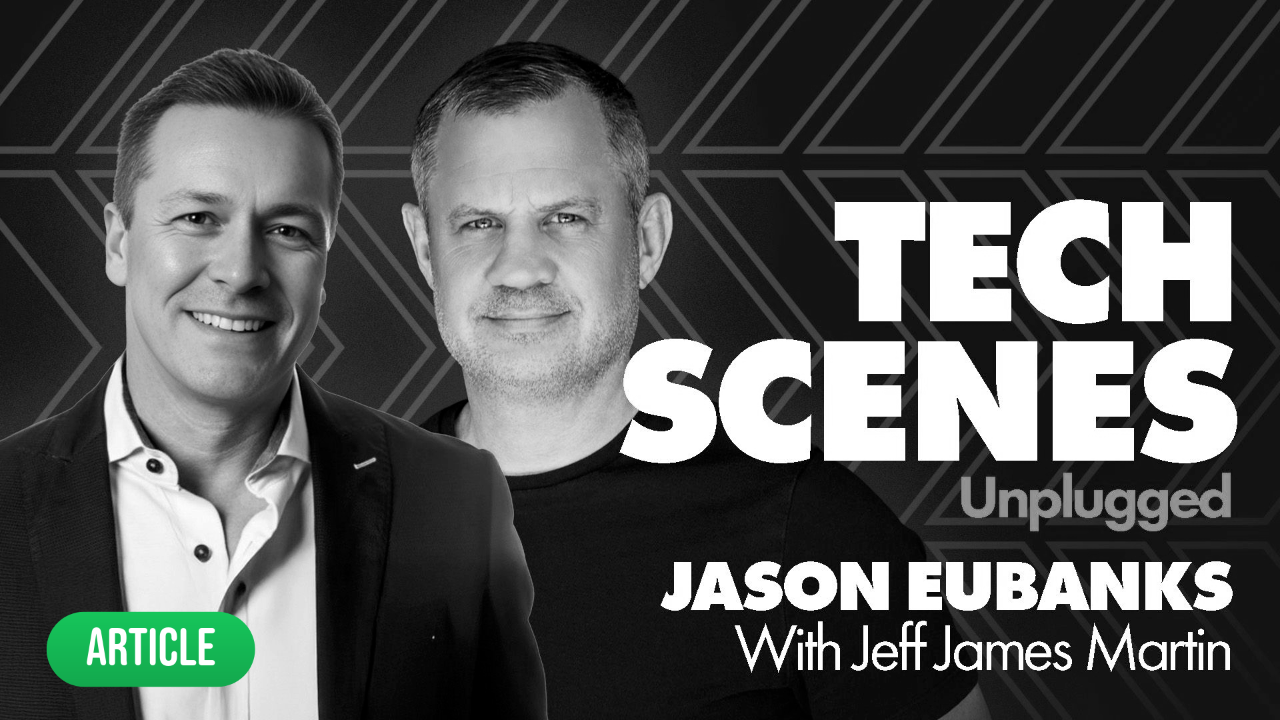
During a recent Tech Scenes conversation with Jason Eubanks, CEO and Co-Founder of Aurasell, a different possibility emerged.
What if the biggest opportunity isn't adding AI to existing systems?
What if the opportunity is redesigning how organizations operate altogether?
Episode Links
Growth Doesn't Create Problems. Complexity Does.
One of the biggest misconceptions in business is that growth itself creates organizational challenges.
Growth is usually a positive outcome.
Complexity is what creates the challenges.
When a company has five employees, coordination happens naturally. Everyone knows what everyone else is working on. Decisions happen quickly. Communication is informal and immediate.
As organizations grow to twenty-five, fifty, or one hundred employees, something changes.
Information becomes fragmented. Teams begin operating in different rhythms. Priorities compete for attention. Decisions require more stakeholders. What once happened naturally now requires deliberate coordination.
Many organizations respond by adding more tools, more meetings, and more processes.
Sometimes that helps.
Often it simply creates another layer of complexity.
The Hidden Cost of Tool Sprawl
Over the past decade, companies have assembled enormous collections of software.
A communication platform.
A project management platform.
A CRM.
A reporting platform.
A knowledge base.
A dashboarding system.
Each tool solves a legitimate problem.
The challenge is that every new system creates another source of truth.
Leadership teams often discover they have more information than ever before and less clarity than they had when the company was smaller.
The problem isn't access to data.
The problem is that information becomes scattered across dozens of disconnected systems.
Eventually leaders begin experiencing what feels like execution drift.
Everyone is working hard.
Yet fewer people seem aligned around the same priorities.
AI Doesn't Fix Fragmentation
Many leaders assume AI will solve these problems automatically.
But AI inherits the strengths and weaknesses of the systems it sits on top of.
If information is fragmented, AI sees fragmented information.
If teams are misaligned, AI accelerates misaligned execution.
If priorities are unclear, AI can help organizations move faster in the wrong direction.
Technology can increase leverage.
It cannot replace organizational clarity.
This is one reason AI-native companies are increasingly rethinking their architecture from the beginning.
Rather than asking how AI fits into existing workflows, they are asking how work should flow inside an AI-enabled organization.
The Real Challenge Is Signal
One theme that surfaced repeatedly throughout the conversation was signal.
Most leadership teams are not struggling because they lack information.
They are struggling because they have too much of it.
Every day brings new dashboards, reports, messages, alerts, metrics, and meetings.
The challenge is determining what actually matters.
High-performing organizations create systems that help leaders identify signal inside the noise.
They create visibility around priorities.
They create accountability around outcomes.
They create operating rhythms that keep everyone moving in the same direction.
In many ways, this is what organizational execution is really about.
Not generating more information.
Creating clarity from complexity.
Why Operating Systems Matter More Than Ever
As AI accelerates the pace of business, operating systems become increasingly important.
Not software platforms.
Organizational operating systems.
The rhythms, meetings, planning processes, communication structures, priorities, accountability mechanisms, and decision-making frameworks that help teams stay aligned as they scale.
Organizations often discover that growth itself is not the problem.
Complexity is the problem.
As teams grow from five people to fifty, and from fifty to hundreds, informal communication breaks down. Priorities compete. Information fragments. Decision-making slows.
The role of an operating system is to create clarity, alignment, accountability, and execution rhythm as complexity increases.
This is one reason many high-growth and mission-critical organizations are investing in operating systems that help teams move together rather than simply move faster.
AI Is Making Leadership More Important
Some people assume AI will reduce the importance of leadership.
The opposite may be true.
As execution accelerates, leaders become increasingly responsible for ensuring teams are aligned around the right priorities.
Technology can help teams move faster.
Leadership determines whether they are moving in the same direction.
The organizations that thrive in the next decade will not necessarily be the organizations with the most AI.
They will likely be the organizations that combine AI leverage with strong leadership, clear priorities, effective operating rhythms, and the ability to continuously learn and adapt.
That has always been important.
AI simply makes it impossible to ignore.
Frequently Asked Questions
What is an AI-native company?
An AI-native company is designed around AI from the beginning rather than adding AI to existing systems later. AI is embedded into workflows, processes, and decision-making from the start.
What is organizational complexity?
Organizational complexity is the increasing challenge of communication, coordination, decision-making, and execution that occurs as organizations grow.
Why do organizations lose alignment as they scale?
As teams grow, information becomes fragmented, communication pathways multiply, and priorities begin competing for attention. Without intentional systems, alignment naturally declines.
What is tool sprawl?
Tool sprawl occurs when organizations continuously add software platforms to solve individual problems, creating disconnected systems that are difficult to manage and coordinate.
Why is signal important for leadership teams?
Signal helps leaders identify what matters most. Strong organizations create systems that surface meaningful information while filtering out unnecessary noise.
Why doesn't AI automatically solve organizational problems?
AI amplifies the systems it operates within. If an organization has fragmented information, unclear priorities, or poor coordination, AI often accelerates those problems rather than solving them.
What is an organizational operating system?
An organizational operating system is the collection of planning processes, meeting rhythms, communication structures, priorities, accountability mechanisms, and tools that help teams stay aligned and execute effectively.
Why do operating systems become more important as organizations grow?
As complexity increases, organizations need structured ways to maintain visibility, alignment, accountability, and execution. Operating systems provide that structure.
How does AI impact leadership?
AI can accelerate execution and improve access to information, but leaders remain responsible for setting direction, aligning teams, making decisions, and maintaining organizational focus.
What is execution drift?
Execution drift occurs when teams become increasingly disconnected from organizational priorities. People remain busy, but their efforts become less coordinated and less aligned with the company's most important objectives.
Related Insights from Tech Scenes
The themes discussed with Jason Eubanks connect directly to several broader conversations around AI, organizational alignment, operating systems, leadership, and scaling complexity.
-
Why AI Is Forcing Growth Companies to Rethink Their Operating Systems
-
Why AI Makes Organizational Alignment More Important, Not Less
-
Why Growth Companies Need Faster Organizational Learning Loops
Together, these articles explore a common theme:
As complexity grows, organizations need better systems, stronger alignment, faster learning, and clearer execution.
Related Resources
Peak Teams – Mastering the Habits of Unstoppable Venture-Backed Companies
Peak Teams – Mastering the Habits of Unstoppable Venture-Backed Companies
Peak Teams explores many of the organizational execution concepts discussed throughout this article, including operating rhythm, leadership alignment, organizational synchronization, measurable accountability, team execution, and scaling complexity.
Collective Genius
Collective Genius helps high-growth and mission-critical organizations strengthen organizational execution, leadership alignment, operating cadence, execution visibility, team coordination, and scaling systems.
Peak OS Software
Learn More About Peak OS Software
Peak OS is an organizational operating system designed to help teams create measurable alignment, recurring operating rhythm, execution visibility, OKR management, team synchronization, and leadership coordination.
Additional Tech Scenes Conversations
Explore the Full Tech Scenes Library
Tech Scenes explores how founders, CEOs, investors, operators, and technology leaders think about leadership, organizational design, AI transformation, operating systems, execution strategy, and scaling organizations.
